 Completed
973
views
0
likes
Shin No-ah
The Undertaker has repeated the end of the world 1,183 times. Having stopped trying to force a happy ending, he tells stories of countless lives, people, disasters, and the cost of trying to save the world.
Keep listening
Completed
 Completed
 Ongoing
 Ongoing
 Chapter 31
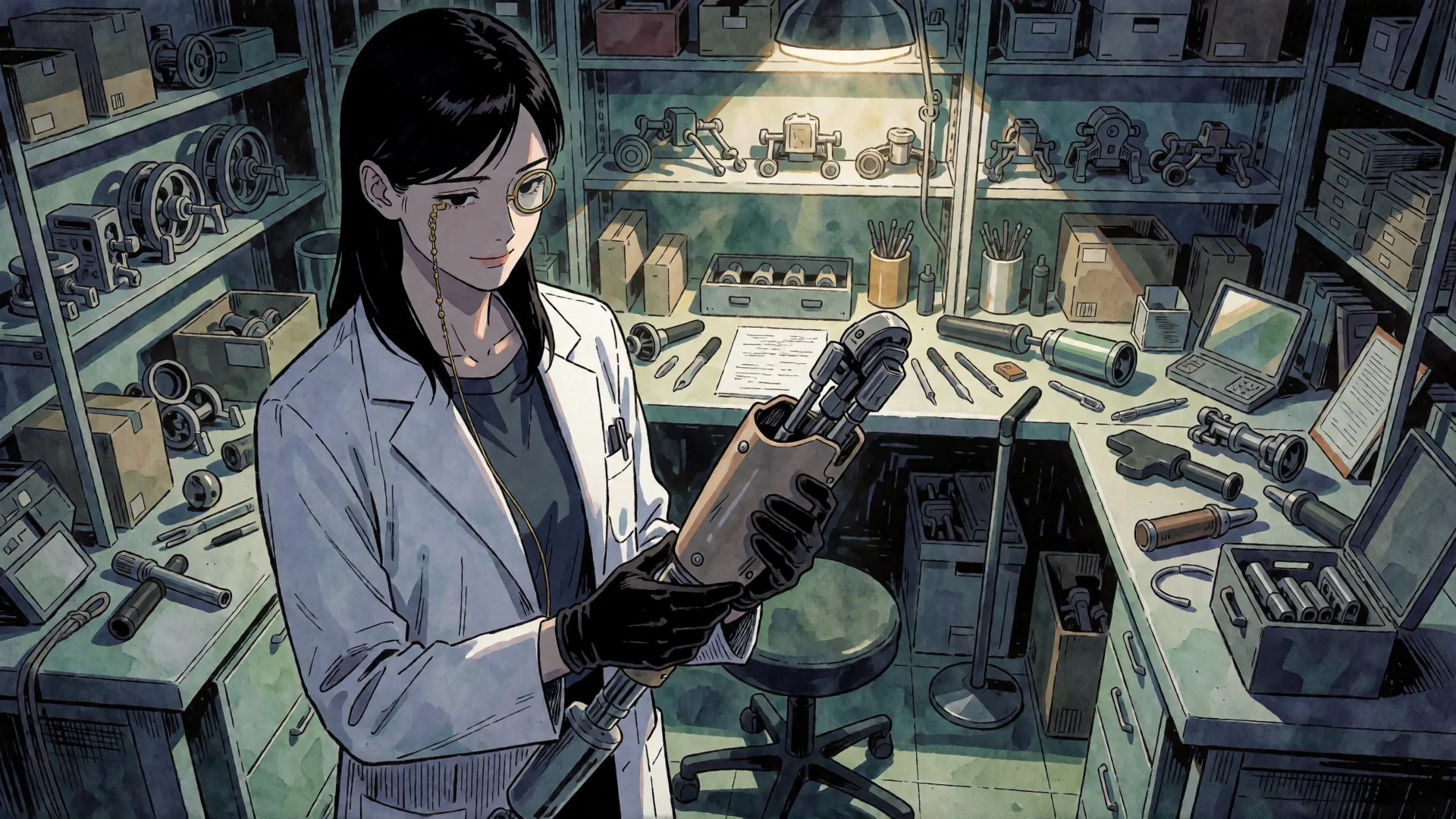
The narrative begins with a cynical examination of the South Korean government's response to the apocalypse, specifically following the opening of a Gate in Seoul. The national government, including the President and National Assembly, evacuated to space, leaving the peninsula leaderless. The remaining local officials wasted three days while monsters proliferated, eventually issuing a generic reassurance speech urging citizens to remain calm. This provoked immediate public outrage. As a Vice Mayor attempted to urge people on Banpo Bridge to trust the authorities, the mob threw him into the Han River. The chaos culminated in a mass evacuation southward and the flight of the Busan Mayor to Japan, establishing the "Second Provisional Government" in Fukuoka, which was widely distrusted by both Koreans and Japanese. A subsequent military coup led by generals attempted to overthrow the corrupt civil administration but failed comically when the army units were devoured by "Ten Legs," a boss monster that perceived large groups as food. With the state effectively destroyed, the narrator introduces Noh Do-hwa, a seventh-grade public servant and assistive device manufacturer. Do-hwa is characterized by her extreme eccentricity and misanthropy; she admits to disliking citizens, soldiers, and even her role as a public servant. Despite her apathy, she possesses a unique Awakener ability to create prosthetics that function with the sensation of real muscle and nerve, requiring no rehabilitation. She maintained a small workshop in Bansong-dong, catering to injured guild members and disabled patients. The chapter details a specific interaction where Do-hwa, rather than moving a patient to her workshop, negotiated with a local guild leader to pave a new road between Haeundae and Bansong-dong to ensure elderly patients could still reach her. This act of pragmatic, albeit self-interested, infrastructure building marked the beginning of her rise from a minor bureaucrat to a pivotal figure in the new order.
12:19
Chapter 31
The narrative begins with a cynical examination of the South Korean government's response to the apocalypse, specifically following the opening of a Gate in Seoul. The national government, including the President and National Assembly, evacuated to space, leaving the peninsula leaderless. The remaining local officials wasted three days while monsters proliferated, eventually issuing a generic reassurance speech urging citizens to remain calm. This provoked immediate public outrage. As a Vice Mayor attempted to urge people on Banpo Bridge to trust the authorities, the mob threw him into the Han River. The chaos culminated in a mass evacuation southward and the flight of the Busan Mayor to Japan, establishing the "Second Provisional Government" in Fukuoka, which was widely distrusted by both Koreans and Japanese. A subsequent military coup led by generals attempted to overthrow the corrupt civil administration but failed comically when the army units were devoured by "Ten Legs," a boss monster that perceived large groups as food. With the state effectively destroyed, the narrator introduces Noh Do-hwa, a seventh-grade public servant and assistive device manufacturer. Do-hwa is characterized by her extreme eccentricity and misanthropy; she admits to disliking citizens, soldiers, and even her role as a public servant. Despite her apathy, she possesses a unique Awakener ability to create prosthetics that function with the sensation of real muscle and nerve, requiring no rehabilitation. She maintained a small workshop in Bansong-dong, catering to injured guild members and disabled patients. The chapter details a specific interaction where Do-hwa, rather than moving a patient to her workshop, negotiated with a local guild leader to pave a new road between Haeundae and Bansong-dong to ensure elderly patients could still reach her. This act of pragmatic, albeit self-interested, infrastructure building marked the beginning of her rise from a minor bureaucrat to a pivotal figure in the new order.
12:19
 Chapter 32
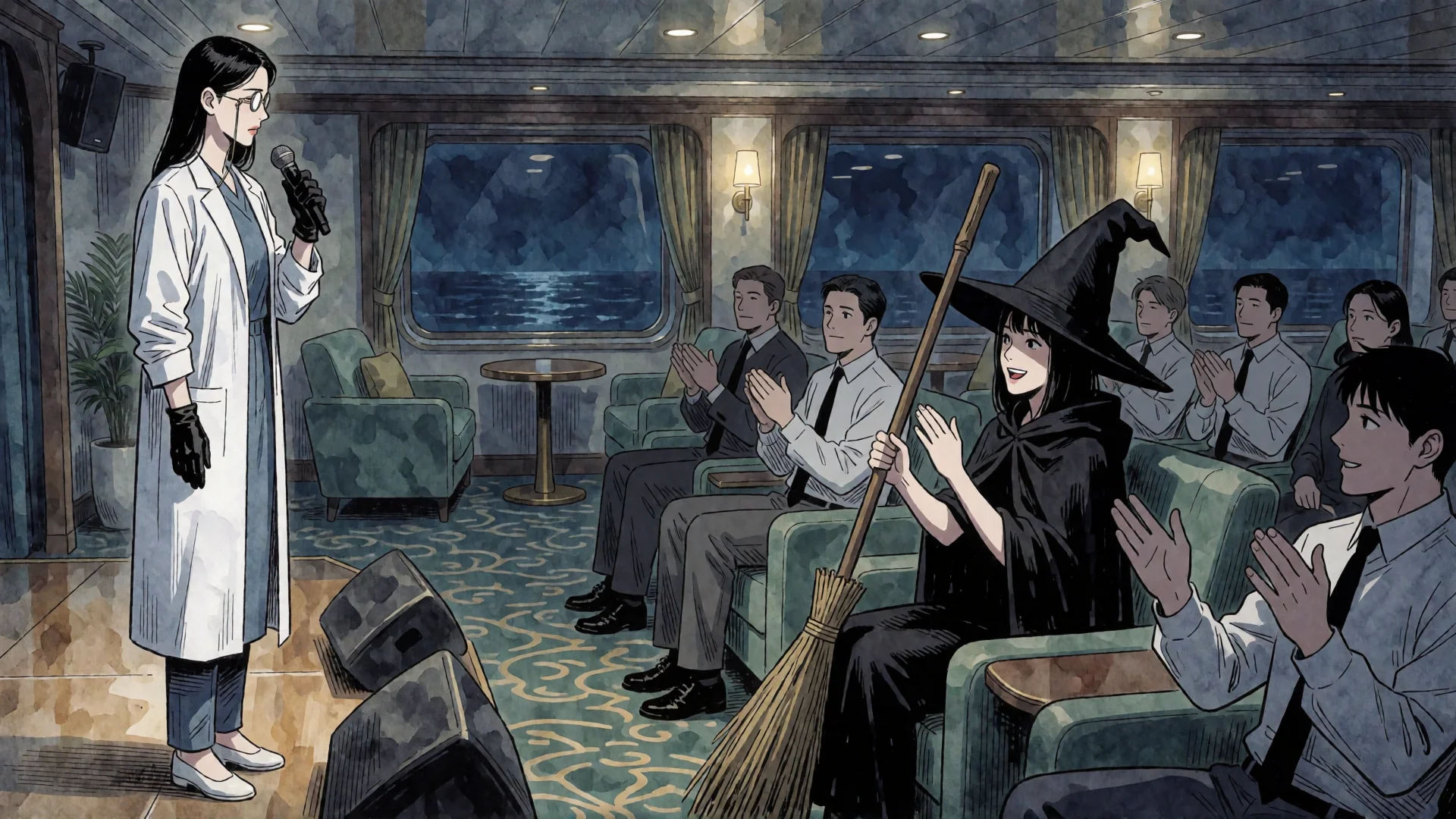
The chapter opens with Noh Do-hwa interacting with elderly patients who praise the road she laid in Bansong. Though they express envy and request similar roads in their towns, Do-hwa’s passive distrust of human nature leads her to suspect vile ulterior motives. She confronts a patient with blunt questions about whether he wants a road laid, testing his sincerity. The scene transitions to Do-hwa visiting the Guild Alliance headquarters on a train, where she meets Dang Seo-rin, the leader of Samcheon. Despite Do-hwa’s misanthropy, she displays respect toward Dang Seo-rin, primarily due to the substantial quarterly assets Dang Seo-rin provides to her workshop. Do-hwa proposes fixing the entire road network of Busan, acknowledging the political difficulty of navigating district jurisdictions. She asks Dang Seo-rin either to mediate between the districts or simply provide a platform at an upcoming guild meeting. Dang Seo-rin agrees to handle the politics, noting that guild leaders have fragile egos. As Do-hwa leaves, she casually mentions she can provide cheap full-body replacements if Dang Seo-rin gets crippled in the future—a remark Dang Seo-rin accepts with good humor, later defended by the narrator (Undertaker). The narrator explains that while they appear as a mercenary captain, they hold significant sway over guild leaders due to past favors. The chapter concludes with a national guild meeting held on a cruise ship off the coast of Busan, attended exclusively by guild leaders to exclude government bureaucrats. Dang Seo-rin opens the event, then yields the floor to the narrator, who receives enthusiastic cheers for his work in Gangwon-do and his role in managing Sim Ah-ryeon’s deployments. The narrator introduces the chapter's topic: fixing the
11:04
Chapter 32
The chapter opens with Noh Do-hwa interacting with elderly patients who praise the road she laid in Bansong. Though they express envy and request similar roads in their towns, Do-hwa’s passive distrust of human nature leads her to suspect vile ulterior motives. She confronts a patient with blunt questions about whether he wants a road laid, testing his sincerity. The scene transitions to Do-hwa visiting the Guild Alliance headquarters on a train, where she meets Dang Seo-rin, the leader of Samcheon. Despite Do-hwa’s misanthropy, she displays respect toward Dang Seo-rin, primarily due to the substantial quarterly assets Dang Seo-rin provides to her workshop. Do-hwa proposes fixing the entire road network of Busan, acknowledging the political difficulty of navigating district jurisdictions. She asks Dang Seo-rin either to mediate between the districts or simply provide a platform at an upcoming guild meeting. Dang Seo-rin agrees to handle the politics, noting that guild leaders have fragile egos. As Do-hwa leaves, she casually mentions she can provide cheap full-body replacements if Dang Seo-rin gets crippled in the future—a remark Dang Seo-rin accepts with good humor, later defended by the narrator (Undertaker). The narrator explains that while they appear as a mercenary captain, they hold significant sway over guild leaders due to past favors. The chapter concludes with a national guild meeting held on a cruise ship off the coast of Busan, attended exclusively by guild leaders to exclude government bureaucrats. Dang Seo-rin opens the event, then yields the floor to the narrator, who receives enthusiastic cheers for his work in Gangwon-do and his role in managing Sim Ah-ryeon’s deployments. The narrator introduces the chapter's topic: fixing the
11:04
 Chapter 33
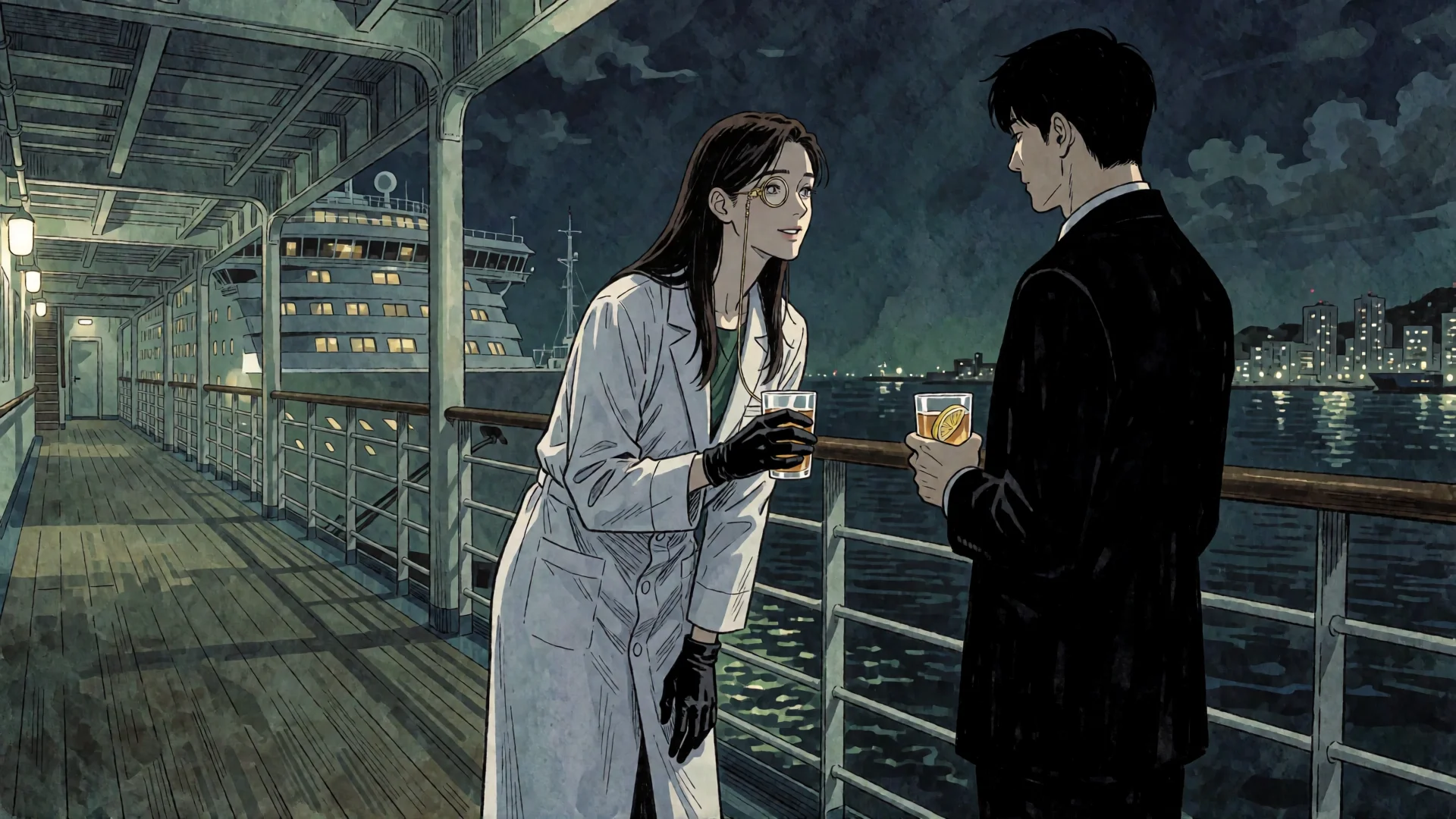
Following a formal meeting, the narrator escapes to the cruise ship deck, pursued by Noh Do-hwa, who confronts him about orchestrating a setup involving Dang Seo-rin. Do-hwa explains that Dang Seo-rin introduced them due to a glowing recommendation, implying the narrator manipulated social dynamics. The narrator feigns ignorance regarding his motives but admits to wanting Do-hwa to manage the national road network. Do-hwa initially rejects the idea, citing her disdain for power and her belief that human misfortune is infinite and unfixable. She argues that while she can repair limbs, she cannot cure societal suffering, and she refuses to become a new ruler or 'king.'
The narrator reveals he is a regressor, having lived 54 cycles, and cites specific personal details about Do-hwa—such as a hidden winery and a lottery win—to prove his knowledge. Do-hwa, surprised and intrigued by his insight into her hidden depths, asks if he can restore the world. The narrator claims not to do it alone but to need her help. He explains that in previous cycles, Do-hwa was pivotal; in the 90th cycle, she attended a final supper and left a regretful note about the rough roads before the meteor shower. The narrator asserts that her failures are data for her growth, encouraging her to experiment freely.
Do-hwa accepts the partnership, and the National Road Management Corps is officially launched. Its mandate is strictly limited to repairing and maintaining roads, avoiding direct governance to prevent corruption. Do-hwa outlines a strategy where the Corps acts as a neutral 'royal family' connecting feudal guild leaders. The Corps will collect usage fees—framed as taxes but marketed as voluntary protection fees—for patrols against monsters. This system forces cities to rely on the Corps for safety and trade, naturally expanding Do-hwa's influence without direct political power. Despite initial setbacks involving spies and poor route planning, the Corps stabilizes. Do-hwa grows resentful of the narrator's manipulative but effective tactics, asking him to convey her failures to her next self. The chapter ends with the narrator passing the message, only for Do-hwa in the 55th cycle to dismiss it with a single word: "Bullshit."
14:35
Chapter 33
Following a formal meeting, the narrator escapes to the cruise ship deck, pursued by Noh Do-hwa, who confronts him about orchestrating a setup involving Dang Seo-rin. Do-hwa explains that Dang Seo-rin introduced them due to a glowing recommendation, implying the narrator manipulated social dynamics. The narrator feigns ignorance regarding his motives but admits to wanting Do-hwa to manage the national road network. Do-hwa initially rejects the idea, citing her disdain for power and her belief that human misfortune is infinite and unfixable. She argues that while she can repair limbs, she cannot cure societal suffering, and she refuses to become a new ruler or 'king.'
The narrator reveals he is a regressor, having lived 54 cycles, and cites specific personal details about Do-hwa—such as a hidden winery and a lottery win—to prove his knowledge. Do-hwa, surprised and intrigued by his insight into her hidden depths, asks if he can restore the world. The narrator claims not to do it alone but to need her help. He explains that in previous cycles, Do-hwa was pivotal; in the 90th cycle, she attended a final supper and left a regretful note about the rough roads before the meteor shower. The narrator asserts that her failures are data for her growth, encouraging her to experiment freely.
Do-hwa accepts the partnership, and the National Road Management Corps is officially launched. Its mandate is strictly limited to repairing and maintaining roads, avoiding direct governance to prevent corruption. Do-hwa outlines a strategy where the Corps acts as a neutral 'royal family' connecting feudal guild leaders. The Corps will collect usage fees—framed as taxes but marketed as voluntary protection fees—for patrols against monsters. This system forces cities to rely on the Corps for safety and trade, naturally expanding Do-hwa's influence without direct political power. Despite initial setbacks involving spies and poor route planning, the Corps stabilizes. Do-hwa grows resentful of the narrator's manipulative but effective tactics, asking him to convey her failures to her next self. The chapter ends with the narrator passing the message, only for Do-hwa in the 55th cycle to dismiss it with a single word: "Bullshit."
14:35
 Chapter 34
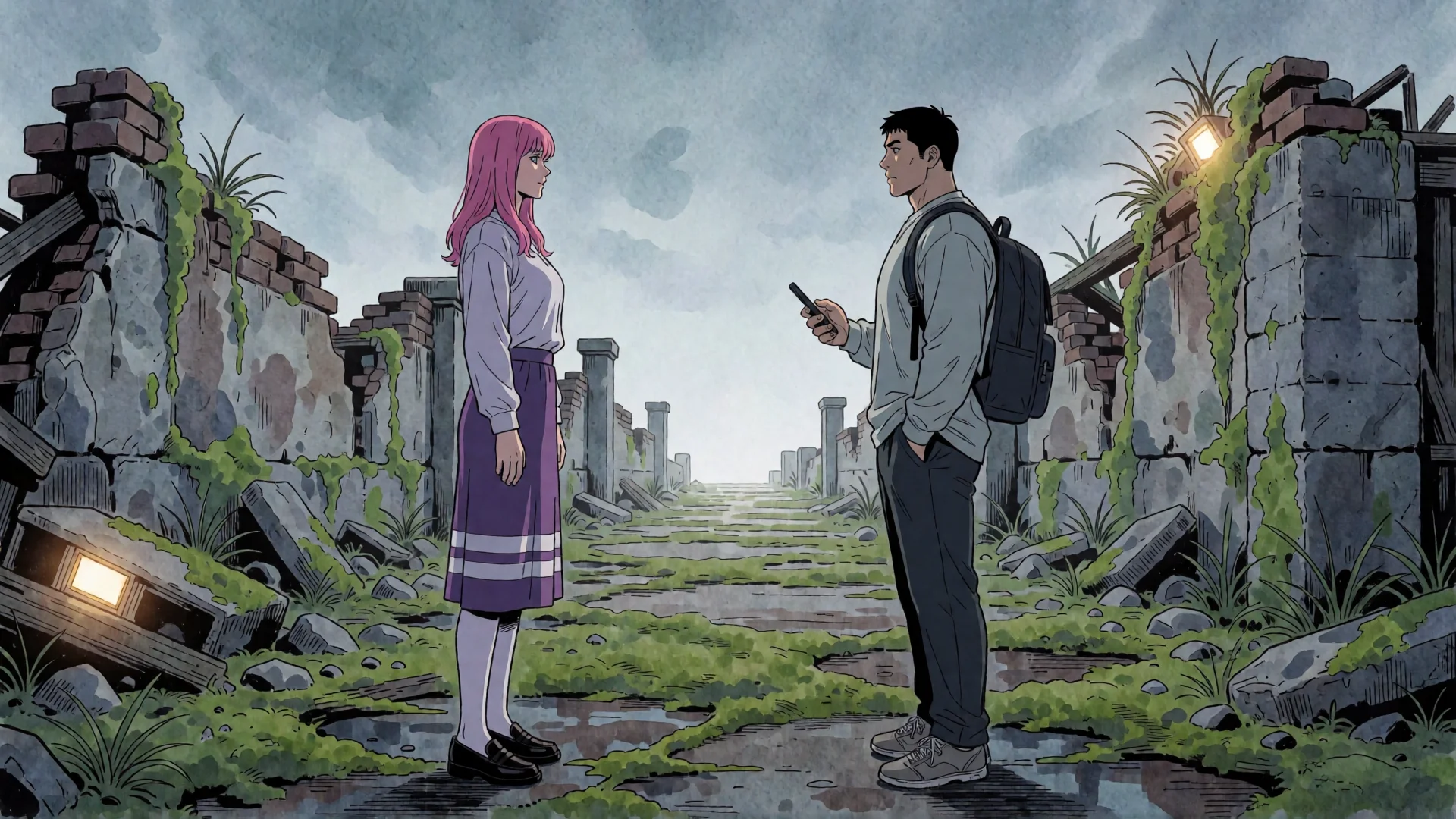
The narrator reflects on the absurdity of bureaucratic systems persisting even in the apocalypse, recalling a Gate Management Public Servant’s strict enforcement of expired Hunter licenses and Noh Do-hwa’s reminder about filing income taxes. This reflection is interrupted by a KakaoTalk notification on May 4 of the 56th cycle, reading 'The Republic of Korea Falls Again' and inviting the recipient to file comprehensive income tax via an ARS number. Initially dismissed as a dangerous 'ghost message'—a common anomaly in a world where electronics are risky—the narrator’s curiosity is piqued when Sim Ah-ryeon reveals she received a physical letter in her secure room, identical to the digital message. Jeong Ye-ji confirms that letters appeared at front doors nationwide, and no one witnessed their delivery, indicating a high-level anomaly affecting the entire Korean Peninsula. The narrator, identified as Undertaker, investigates an SG Net post where an anonymous user called the number. The user reported a robotic voice menu offering options like 'Additional Corpse Tax' and directing him to the destroyed Pocheon Tax Office. Despite community warnings against engaging anomalies, the user planned to investigate Pocheon. Seizing the opportunity to verify the anomaly, Undertaker travels to Pocheon. En route, he encounters Lee Ju-ho, a young man from his past cycle who also heads to the tax office with a smartphone showing the SG Net post, confirming he is the anonymous investigator.
10:47
Chapter 34
The narrator reflects on the absurdity of bureaucratic systems persisting even in the apocalypse, recalling a Gate Management Public Servant’s strict enforcement of expired Hunter licenses and Noh Do-hwa’s reminder about filing income taxes. This reflection is interrupted by a KakaoTalk notification on May 4 of the 56th cycle, reading 'The Republic of Korea Falls Again' and inviting the recipient to file comprehensive income tax via an ARS number. Initially dismissed as a dangerous 'ghost message'—a common anomaly in a world where electronics are risky—the narrator’s curiosity is piqued when Sim Ah-ryeon reveals she received a physical letter in her secure room, identical to the digital message. Jeong Ye-ji confirms that letters appeared at front doors nationwide, and no one witnessed their delivery, indicating a high-level anomaly affecting the entire Korean Peninsula. The narrator, identified as Undertaker, investigates an SG Net post where an anonymous user called the number. The user reported a robotic voice menu offering options like 'Additional Corpse Tax' and directing him to the destroyed Pocheon Tax Office. Despite community warnings against engaging anomalies, the user planned to investigate Pocheon. Seizing the opportunity to verify the anomaly, Undertaker travels to Pocheon. En route, he encounters Lee Ju-ho, a young man from his past cycle who also heads to the tax office with a smartphone showing the SG Net post, confirming he is the anonymous investigator.
10:47
 Chapter 35
Undertaker (the narrator) reunites with Lee Ju-ho, who recognizes the narrator as the legendary 'Undertaker' from past cycles. Lee Ju-ho, formerly known as 'iJoinedToday' or 'Anonymous' on SG Net, approaches Undertaker after seeing his post about a new anomaly. They quickly establish rapport, with Undertaker signing a brush calligraphy autograph. Lee Ju-ho reveals he posted anonymously to share information about the Pocheon Tax Office anomaly, an event tied to past traumas involving Sim Ah-ryeon.
They arrive at the Pocheon Tax Office, a pristine building amidst ruined surroundings, identifying it as a high-level Void. Park Sang-hyun, a known local bully and son of a former vice guild leader, tumbles out, missing his right leg, screaming for help. He explains he entered the building and was dragged in by a metallic clanking sound. Undertaker and Lee Ju-ho watch as Park is dragged back into the Void and devoured, with Lee Ju-ho noting that Park was a troublemaker and his death might be preferable for the guild.
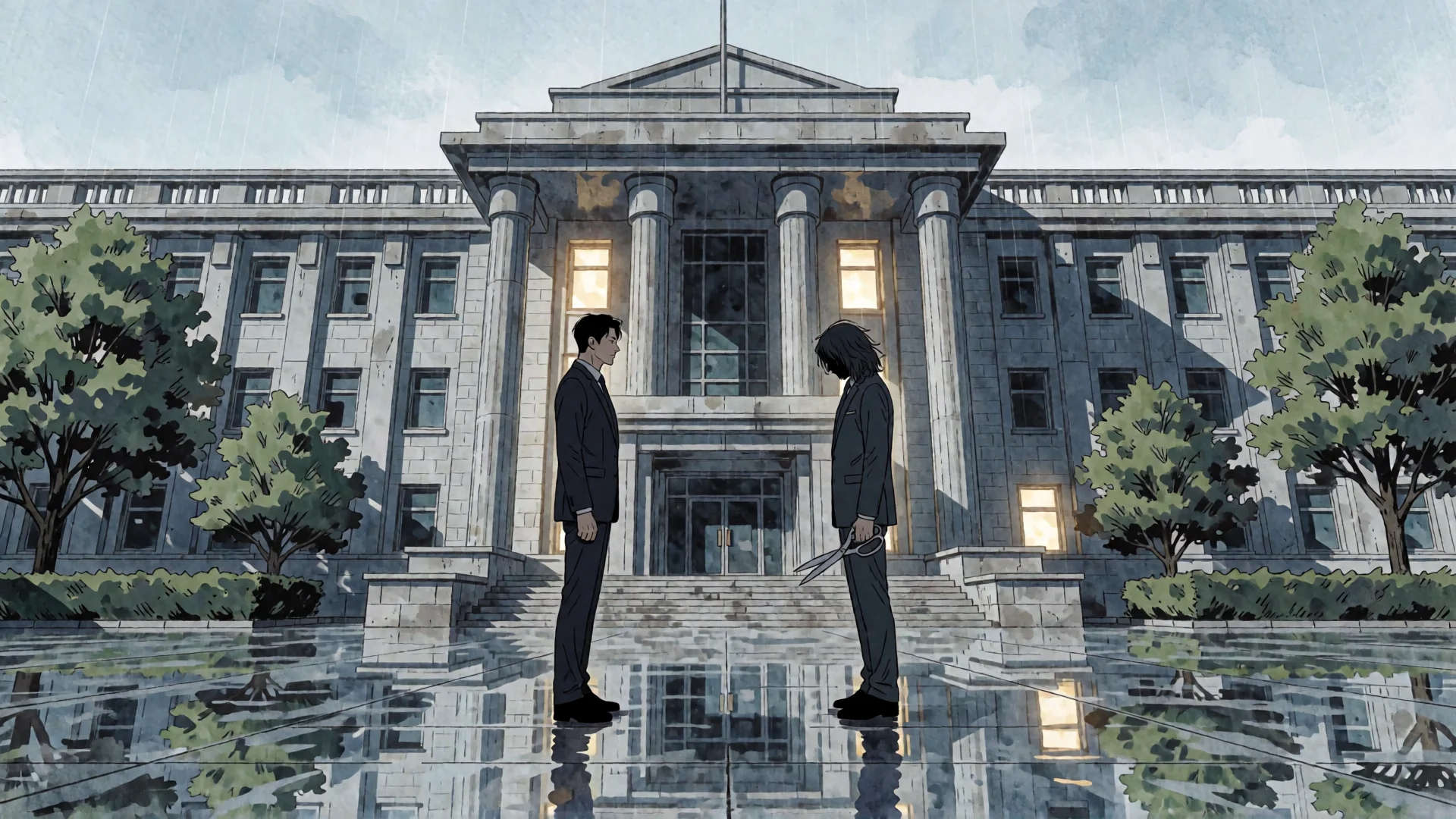
An entity emerges from the Tax Office, resembling a receptionist but with long, disheveled hair obscuring its face and wielding large, bloody scissors. It demands ID cards to calculate taxes. The entity confirms Lee Ju-ho’s identity and demands a 'tax' of 100 grams, including Body and Slave Tax. Undertaker realizes the 'grams' refer to body mass, as evidenced by Park’s missing limb. To save Lee Ju-ho, Undertaker shaves Lee’s head completely bald and produces 100 grams of urine in a plastic bag. The entity accepts these offerings as valid tax payment and retreats.
Later, Lee Ju-ho posts the solution on SG Net under the alias 'Anonymous,' warning others to pay small amounts (hair/urine) but avoid larger demands. This sparks a 'Tax Challenge' where users compare their tax debts. Undertaker then visits the Banpo Tax Office in Seoul. The long-haired entity there asks for his ID. Upon processing his age and identity, the anomaly begins reciting numbers incoherently, swells rapidly, and explodes in a shower of black fluid. Undertaker retrieves his ID from the wreckage as the Tax Office vanishes, concluding that he owes a debt too vast to pay.
12:31
Chapter 35
Undertaker (the narrator) reunites with Lee Ju-ho, who recognizes the narrator as the legendary 'Undertaker' from past cycles. Lee Ju-ho, formerly known as 'iJoinedToday' or 'Anonymous' on SG Net, approaches Undertaker after seeing his post about a new anomaly. They quickly establish rapport, with Undertaker signing a brush calligraphy autograph. Lee Ju-ho reveals he posted anonymously to share information about the Pocheon Tax Office anomaly, an event tied to past traumas involving Sim Ah-ryeon.
They arrive at the Pocheon Tax Office, a pristine building amidst ruined surroundings, identifying it as a high-level Void. Park Sang-hyun, a known local bully and son of a former vice guild leader, tumbles out, missing his right leg, screaming for help. He explains he entered the building and was dragged in by a metallic clanking sound. Undertaker and Lee Ju-ho watch as Park is dragged back into the Void and devoured, with Lee Ju-ho noting that Park was a troublemaker and his death might be preferable for the guild.
An entity emerges from the Tax Office, resembling a receptionist but with long, disheveled hair obscuring its face and wielding large, bloody scissors. It demands ID cards to calculate taxes. The entity confirms Lee Ju-ho’s identity and demands a 'tax' of 100 grams, including Body and Slave Tax. Undertaker realizes the 'grams' refer to body mass, as evidenced by Park’s missing limb. To save Lee Ju-ho, Undertaker shaves Lee’s head completely bald and produces 100 grams of urine in a plastic bag. The entity accepts these offerings as valid tax payment and retreats.
Later, Lee Ju-ho posts the solution on SG Net under the alias 'Anonymous,' warning others to pay small amounts (hair/urine) but avoid larger demands. This sparks a 'Tax Challenge' where users compare their tax debts. Undertaker then visits the Banpo Tax Office in Seoul. The long-haired entity there asks for his ID. Upon processing his age and identity, the anomaly begins reciting numbers incoherently, swells rapidly, and explodes in a shower of black fluid. Undertaker retrieves his ID from the wreckage as the Tax Office vanishes, concluding that he owes a debt too vast to pay.
12:31
 Chapter 36
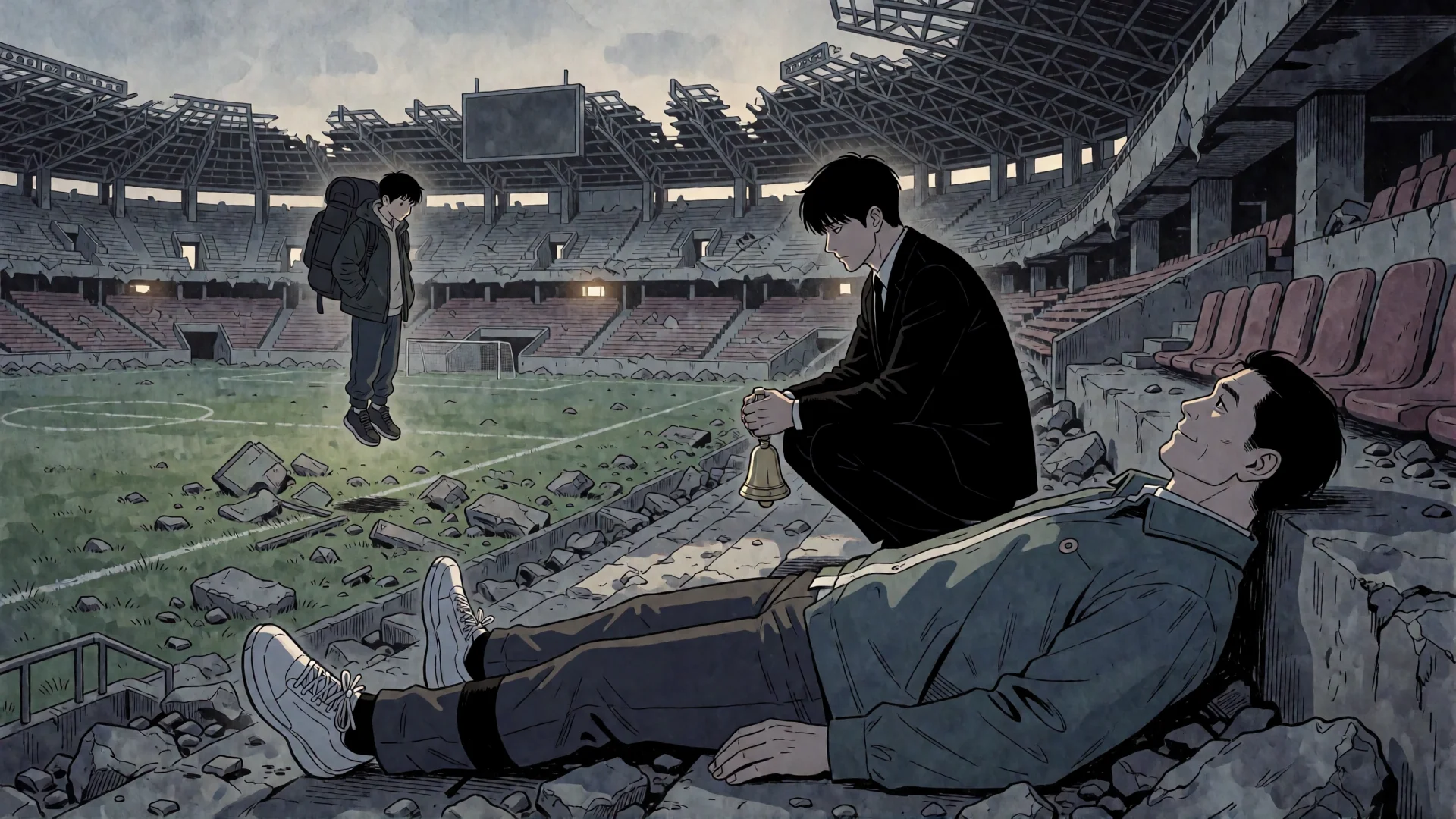
The narrator, who refers to himself by the moniker "Undertaker," reflects on his fourth life cycle, a period he considers his "teen phase" and source of deep embarrassment. During this time, he acquired the ability [Complete Memory], allowing him to reconstruct these vague, shadowy events. He walks through the devastated Busan Station terminal, jingling bells and offering a choice to the dying and despairing: escape their pain by entering an endless dream of their happiest moments. This power, known as [Time Seal], ensures that once a person enters the dream, they are completely forgotten by the world, with only the Undertaker retaining their memory. He explains that while many chose suicide over the terror of being erased, some accepted his offer, finding comfort in oblivion.
Among those he encounters is Kim Joo-chul, a retired professional football left-back. Kim Joo-chul is a crippled man, his left leg damaged from a career-ending injury sustained at age 26, which he claims led to his family's collapse; his wife died recently, and his son had left with the mother years prior. Despite his physical decline and social ostracization by survivors who viewed him as useless, Kim Joo-chul clung to his past glory, obsessively watching highlight reels on his phone and bragging about his former fame to anyone who would listen. The narrator notes that Kim Joo-chul had died repeatedly in previous cycles—eaten by monsters, losing an arm protecting others, or succumbing to injuries—but in the fourth cycle, they escaped the station together. Shortly after, a hound-like monster bit off Kim Joo-chul's remaining good leg, leaving him with only a stump. Carrying the bleeding, semi-conscious man to a ruined football stadium, the narrator listens to Kim Joo-chul's final ramblings. Kim Joo-chul expresses relief at the loss of his pain and asks to be put in the dream. He accepts the terms of [Time Seal], preferring to be forgotten by the world he despised. As his life fades, Kim Joo-chul does not ask to be remembered; instead, he repeatedly murmurs his son’s name, "Kim Si-eun," born on November 11, until he dies. The narrator rings his bell, sealing the man in eternal dreams, and notes that it would take many years before he finally encountered the heir to those last words.
11:07
Chapter 36
The narrator, who refers to himself by the moniker "Undertaker," reflects on his fourth life cycle, a period he considers his "teen phase" and source of deep embarrassment. During this time, he acquired the ability [Complete Memory], allowing him to reconstruct these vague, shadowy events. He walks through the devastated Busan Station terminal, jingling bells and offering a choice to the dying and despairing: escape their pain by entering an endless dream of their happiest moments. This power, known as [Time Seal], ensures that once a person enters the dream, they are completely forgotten by the world, with only the Undertaker retaining their memory. He explains that while many chose suicide over the terror of being erased, some accepted his offer, finding comfort in oblivion.
Among those he encounters is Kim Joo-chul, a retired professional football left-back. Kim Joo-chul is a crippled man, his left leg damaged from a career-ending injury sustained at age 26, which he claims led to his family's collapse; his wife died recently, and his son had left with the mother years prior. Despite his physical decline and social ostracization by survivors who viewed him as useless, Kim Joo-chul clung to his past glory, obsessively watching highlight reels on his phone and bragging about his former fame to anyone who would listen. The narrator notes that Kim Joo-chul had died repeatedly in previous cycles—eaten by monsters, losing an arm protecting others, or succumbing to injuries—but in the fourth cycle, they escaped the station together. Shortly after, a hound-like monster bit off Kim Joo-chul's remaining good leg, leaving him with only a stump. Carrying the bleeding, semi-conscious man to a ruined football stadium, the narrator listens to Kim Joo-chul's final ramblings. Kim Joo-chul expresses relief at the loss of his pain and asks to be put in the dream. He accepts the terms of [Time Seal], preferring to be forgotten by the world he despised. As his life fades, Kim Joo-chul does not ask to be remembered; instead, he repeatedly murmurs his son’s name, "Kim Si-eun," born on November 11, until he dies. The narrator rings his bell, sealing the man in eternal dreams, and notes that it would take many years before he finally encountered the heir to those last words.
11:07
 Chapter 37
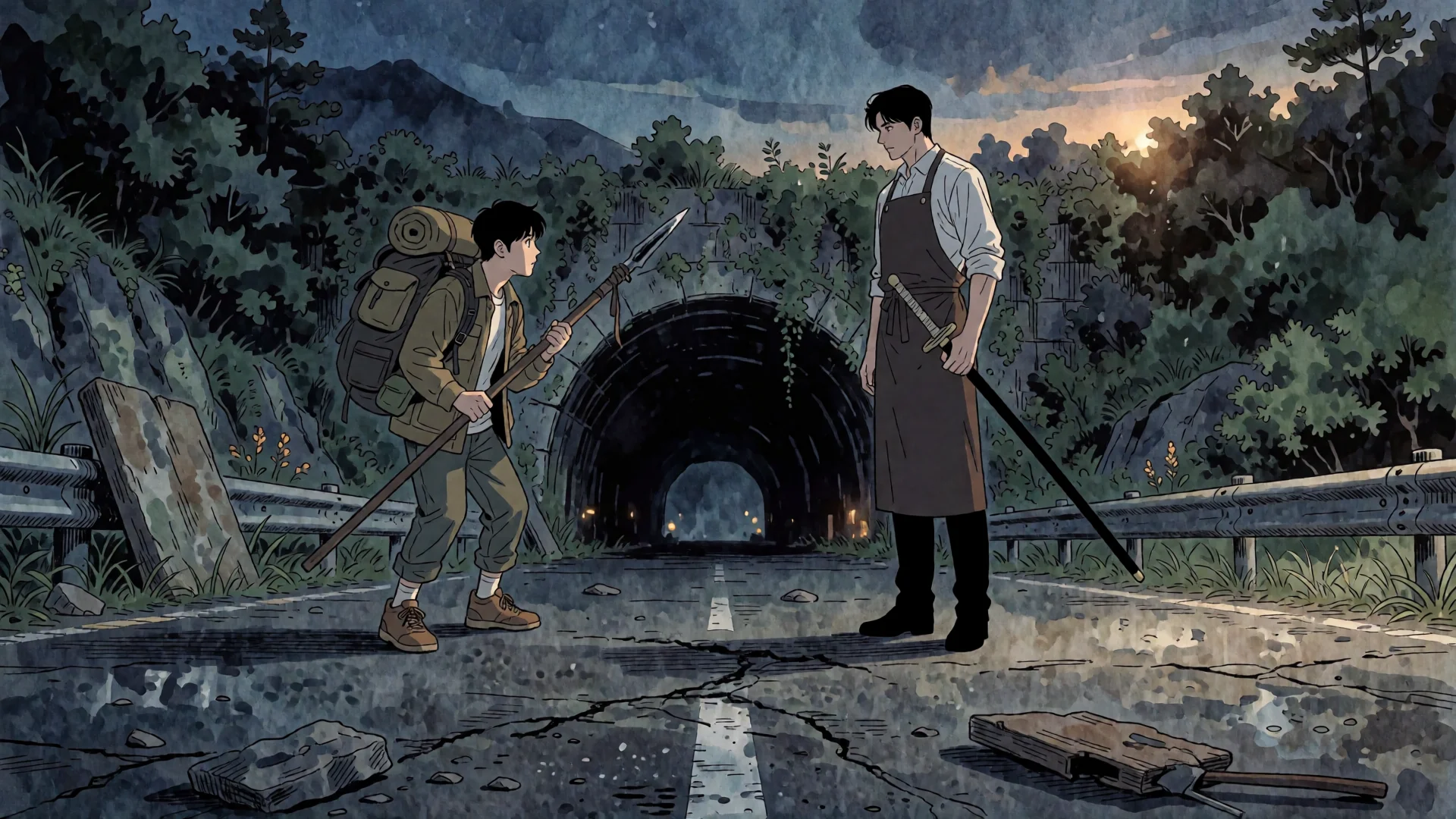
The Undertaker reflects on his expertise in the geography of the Korean Peninsula, noting that his internal navigation app has become increasingly accurate since the creation of the National Road Management Corps. He explains that due to a lack of resources, tunnels are dangerous habitats for monsters, making the 'Road Streamlining Operation'—a project to bypass or create safe one-lane roads—critical. Noh Do-hwa entrusts this massive logistical challenge to him. The Undertaker recalls his travels during cycles 54–56, where he mapped routes alongside the Saintess, Jeong Ye-ji, who communicated via telepathy. During these travels, he met ordinary people rather than just awakeners. At the collapsed Changwon Tunnel, he encounters a short, young backpacker holding a makeshift spear, later identified as Kim Si-eun. The young man is startled but polite, revealing he is traveling from Asan to Busan to visit his late mother’s hometown in Daesan-myeon, Changwon. The Undertaker warns him of the slime monsters inside the tunnel and collapses the entrance to prevent others from entering. Impressed by the Undertaker’s power and hearing his tragic backstory about his mother, Kim Si-eun asks to join him. The Undertaker accepts, introducing himself by his moniker and agreeing to protect the young man. As they travel, the Undertaker notices something amiss when Kim Si-eun has no memory of his father. The narrator reveals that this Kim Si-eun is the son of the late football player Kim Joo-chul. The Undertaker explains that his 'Time Seal' ability erased all memory of Kim Joo-chul from everyone, including Kim Si-eun himself. He argues that Kim Si-eun’s survival was only possible because the Undertaker previously exterminated the monsters Ten Legs and the Udumbara World Tree, which would have otherwise killed him. Kim Si-eun is skeptical but intrigued, especially regarding his father’s imprisonment in a Busan stadium. The chapter ends with Kim Si-eun agreeing to follow the Undertaker to the truth, ending his hesitation.
14:40
Chapter 37
The Undertaker reflects on his expertise in the geography of the Korean Peninsula, noting that his internal navigation app has become increasingly accurate since the creation of the National Road Management Corps. He explains that due to a lack of resources, tunnels are dangerous habitats for monsters, making the 'Road Streamlining Operation'—a project to bypass or create safe one-lane roads—critical. Noh Do-hwa entrusts this massive logistical challenge to him. The Undertaker recalls his travels during cycles 54–56, where he mapped routes alongside the Saintess, Jeong Ye-ji, who communicated via telepathy. During these travels, he met ordinary people rather than just awakeners. At the collapsed Changwon Tunnel, he encounters a short, young backpacker holding a makeshift spear, later identified as Kim Si-eun. The young man is startled but polite, revealing he is traveling from Asan to Busan to visit his late mother’s hometown in Daesan-myeon, Changwon. The Undertaker warns him of the slime monsters inside the tunnel and collapses the entrance to prevent others from entering. Impressed by the Undertaker’s power and hearing his tragic backstory about his mother, Kim Si-eun asks to join him. The Undertaker accepts, introducing himself by his moniker and agreeing to protect the young man. As they travel, the Undertaker notices something amiss when Kim Si-eun has no memory of his father. The narrator reveals that this Kim Si-eun is the son of the late football player Kim Joo-chul. The Undertaker explains that his 'Time Seal' ability erased all memory of Kim Joo-chul from everyone, including Kim Si-eun himself. He argues that Kim Si-eun’s survival was only possible because the Undertaker previously exterminated the monsters Ten Legs and the Udumbara World Tree, which would have otherwise killed him. Kim Si-eun is skeptical but intrigued, especially regarding his father’s imprisonment in a Busan stadium. The chapter ends with Kim Si-eun agreeing to follow the Undertaker to the truth, ending his hesitation.
14:40
 Chapter 38
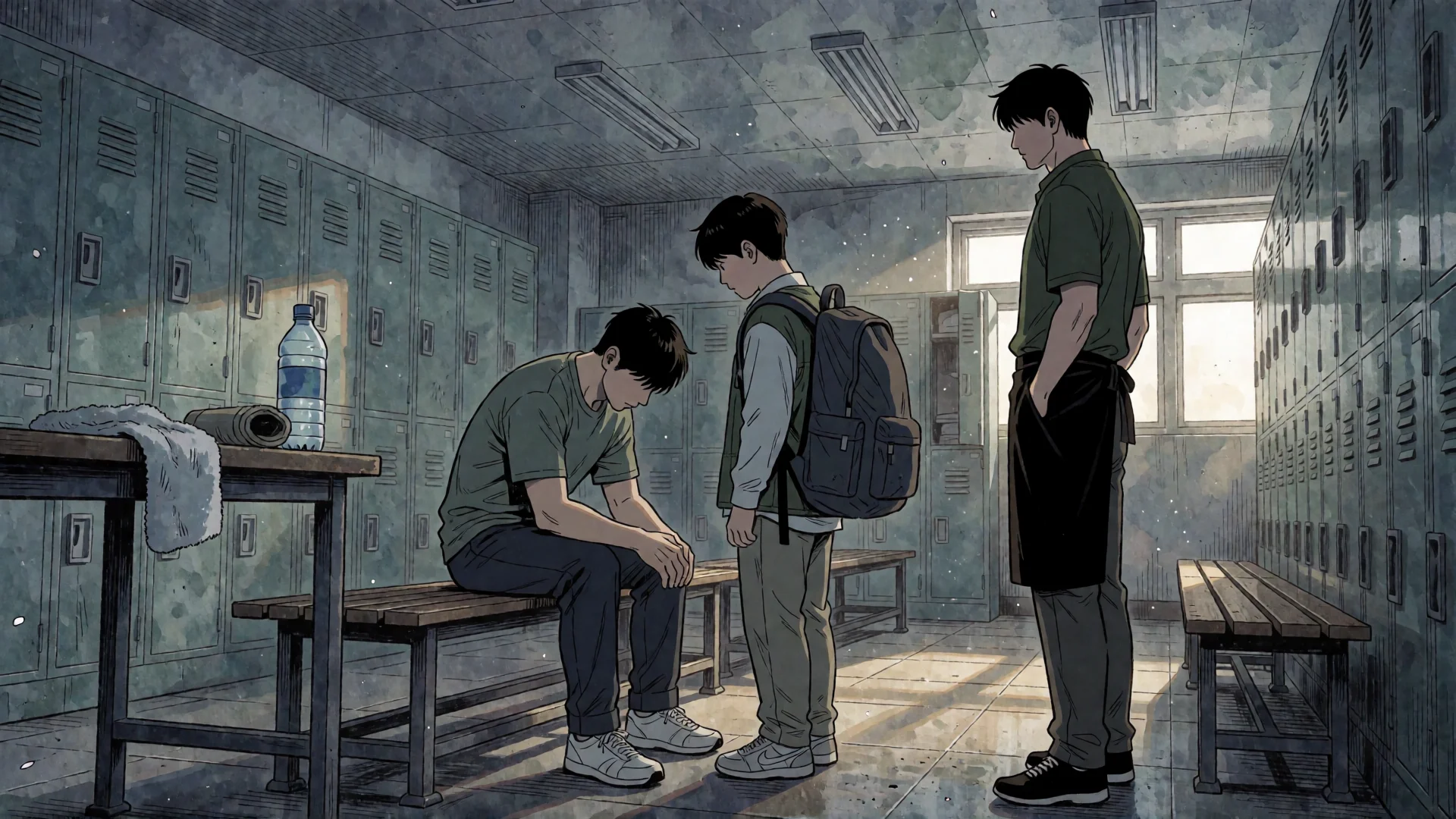
The narrator, identified as the Undertaker, leads Kim Si-eun into a partially destroyed football stadium in Busan. The setting is ruined, with collapsed outer walls and exposed steel frames, a stark contrast to its past glory. The narrator explains that they are at a specific location marked by a crystal, which only he can perceive as a 'tombstone' or 'gravestone.' He instructs Kim Si-eun to hold his hand tightly, explaining that while the narrator can freely enter the sealed dreams of those he has trapped, Kim Si-eun can only connect while holding his hand. They approach the crystal, and upon the narrator pressing against it, they are transported into a dream sequence. The desolate ruins vanish, replaced by a vibrant, packed stadium during a football match. The atmosphere is electric with cheering fans, waving flags, and loud chants. Kim Si-eun is stunned by the sudden transition from ruin to life.
On the field, the narrator points out Kim Joo-chul, Kim Si-eun’s father, who is playing in his prime. Kim Joo-chul performs exceptionally, scoring a goal with a header and assisting another play, earning cheers from the crowd. After scoring, he jumps into the stands to kiss his wife and hold their child, Kim Si-eun. Kim Si-eun recognizes the woman as his mother and is visibly shaken by the sight of his father’s happiness. The narrator reveals that this moment was Kim Joo-chul’s happiest, a memory he trapped himself in to avoid the reality of his future: the destruction of his leg, his descent into alcoholism and gambling, the abandonment of his family, and his wife’s death.
Following Kim Joo-chul into the locker room, the narrator reveals his identity as the 'Undertaker' who sealed Kim Joo-chul in time. The dream freezes, and colors fade to gray. Kim Joo-chul recognizes the narrator and accepts the situation. The narrator introduces Kim Si-eun as his son. Kim Joo-chul is initially shocked but embraces Si-eun, remarking on his growth. When asked about his wife’s death, Kim Si-eun replies she died seven years ago. Kim Joo-chul breaks down, apologizing repeatedly to his son for his weakness and failures as a father. He realizes the tragedy of being forgotten and trapped in a loop of happiness while his actual family suffers and dies. The narrator reflects on his use of [Time Seal] as a dark past, acknowledging that sealing people away was a form of giving up on finding a better ending.
After leaving the dream, Kim Si-eun expresses conflicted feelings but gratitude for meeting his father. He announces his intention to travel to Japan, seeking new horizons. The narrator advises him to avoid tunnels and be cautious of strange phenomena in Japan, hinting at the dangers of the region. The narrator watches Kim Si-eun depart, trusting that Kim Joo-chul’s sincere apology was real. The chapter ends with the image of the stadium’s dream continuing, where Kim Joo-chul runs forever on an unbroken field, celebrating with his family in an eternal loop.
14:18
Chapter 38
The narrator, identified as the Undertaker, leads Kim Si-eun into a partially destroyed football stadium in Busan. The setting is ruined, with collapsed outer walls and exposed steel frames, a stark contrast to its past glory. The narrator explains that they are at a specific location marked by a crystal, which only he can perceive as a 'tombstone' or 'gravestone.' He instructs Kim Si-eun to hold his hand tightly, explaining that while the narrator can freely enter the sealed dreams of those he has trapped, Kim Si-eun can only connect while holding his hand. They approach the crystal, and upon the narrator pressing against it, they are transported into a dream sequence. The desolate ruins vanish, replaced by a vibrant, packed stadium during a football match. The atmosphere is electric with cheering fans, waving flags, and loud chants. Kim Si-eun is stunned by the sudden transition from ruin to life.
On the field, the narrator points out Kim Joo-chul, Kim Si-eun’s father, who is playing in his prime. Kim Joo-chul performs exceptionally, scoring a goal with a header and assisting another play, earning cheers from the crowd. After scoring, he jumps into the stands to kiss his wife and hold their child, Kim Si-eun. Kim Si-eun recognizes the woman as his mother and is visibly shaken by the sight of his father’s happiness. The narrator reveals that this moment was Kim Joo-chul’s happiest, a memory he trapped himself in to avoid the reality of his future: the destruction of his leg, his descent into alcoholism and gambling, the abandonment of his family, and his wife’s death.
Following Kim Joo-chul into the locker room, the narrator reveals his identity as the 'Undertaker' who sealed Kim Joo-chul in time. The dream freezes, and colors fade to gray. Kim Joo-chul recognizes the narrator and accepts the situation. The narrator introduces Kim Si-eun as his son. Kim Joo-chul is initially shocked but embraces Si-eun, remarking on his growth. When asked about his wife’s death, Kim Si-eun replies she died seven years ago. Kim Joo-chul breaks down, apologizing repeatedly to his son for his weakness and failures as a father. He realizes the tragedy of being forgotten and trapped in a loop of happiness while his actual family suffers and dies. The narrator reflects on his use of [Time Seal] as a dark past, acknowledging that sealing people away was a form of giving up on finding a better ending.
After leaving the dream, Kim Si-eun expresses conflicted feelings but gratitude for meeting his father. He announces his intention to travel to Japan, seeking new horizons. The narrator advises him to avoid tunnels and be cautious of strange phenomena in Japan, hinting at the dangers of the region. The narrator watches Kim Si-eun depart, trusting that Kim Joo-chul’s sincere apology was real. The chapter ends with the image of the stadium’s dream continuing, where Kim Joo-chul runs forever on an unbroken field, celebrating with his family in an eternal loop.
14:18
 Chapter 39
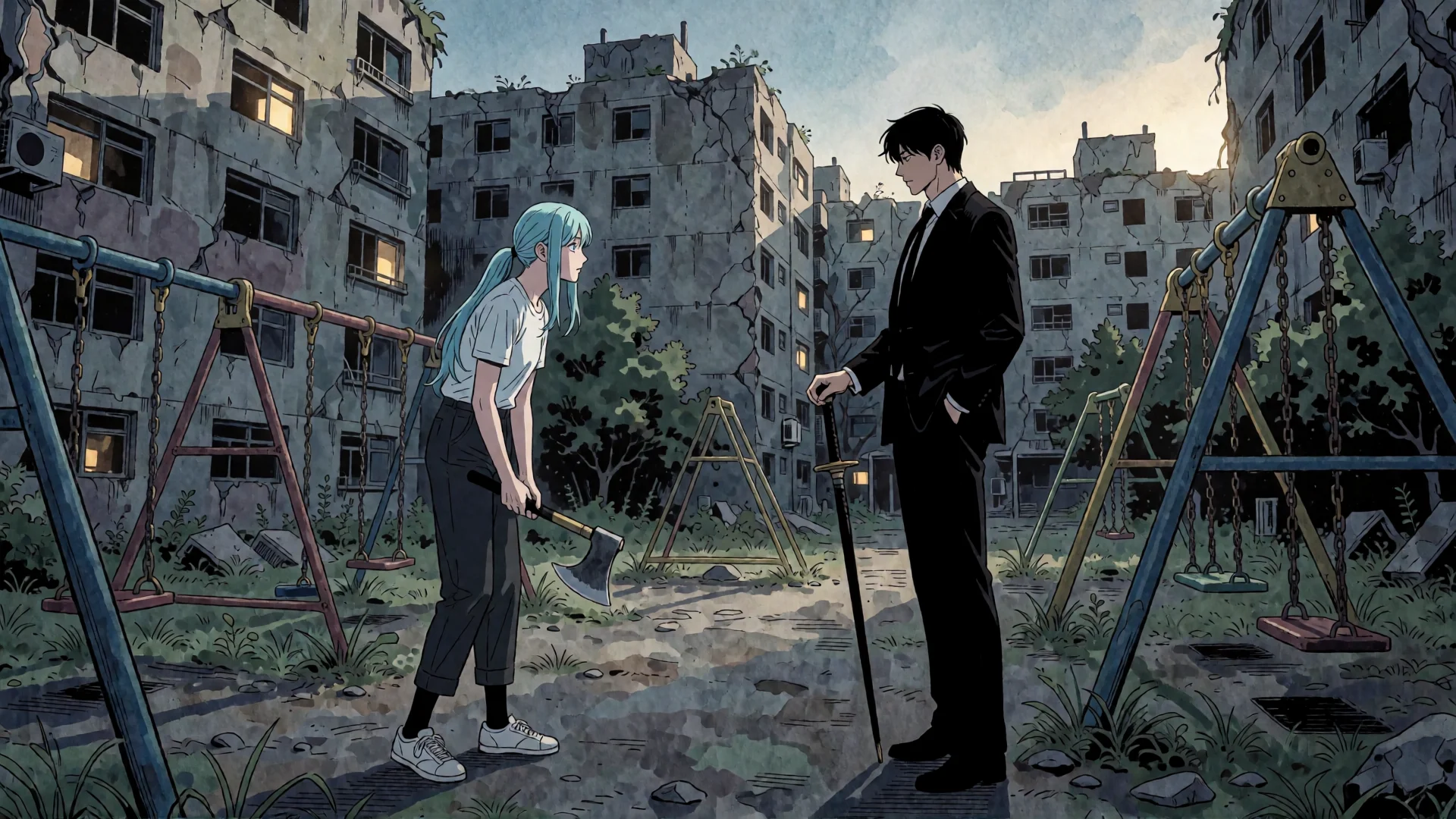
The narrative opens with the narrator, Go Yuir (referred to as Mr. Undertaker), reflecting on his strategic preference for keeping the Saintess, Jeong Ye-ji, close during overseas missions, comparing her support to a vital game mechanic. He maintains a 'Saintess User Manual' containing strategic insights on party members, a practice that others find creepy but the Saintess accepts as absolute truth. The Saintess asks why they are forbidden from using Clairvoyance to observe Go Yuri. The Undertaker explains that Go Yuri possesses a top-tier passive mental corruption ability capable of brainwashing anyone who makes contact. He recounts a tragic instance from the 89th cycle where the Saintess was targeted; Seo Gyu, possessing the Saintess's personal information, likely facilitated Go Yuri's approach, resulting in the Saintess being found hanged by a towel rack in an induced suicide. The Saintess resolves to handle remaining risks without taking unnecessary chances and asks about the consequences if the Undertaker leaves risks unattended. The Undertaker admits he has omitted critical information, specifically regarding the 'Executor Route'—the fate of the Saintess when corrupted. He reflects on their symbiotic alliance: he needs her for mental stability and survival, while she lacks physical strength. He details their history of surviving major catastrophes like Ten Legs, Udumbara, and the Meteor Shower together. Over 16 years, the Saintess’s Clairvoyance has expanded to cover the Korean Peninsula and potentially the Shandong Peninsula, aided by the Undertaker’s life elixirs. However, this expansion exposes her to the horrors of civilian massacres and crimes outside their jurisdiction, such as the Nampo massacre in North Korea. The Saintess, wise and considerate, stopped reporting external tragedies to avoid burdening him, yet the accumulated trauma of witnessing deaths silently poisoned her heart. The scene shifts to a dilapidated playground where the Undertaker spars with the Saintess, deflecting her thrown hand axe with his sword. He praises her natural martial talent and her unique, transparent aura, which sounds like breaking glass upon impact. The Saintess admits she began training recently. The Undertaker notes her progress, proud that the previously reclusive Saintess has changed. As he offers her a towel, the Saintess experiences moments of absent-mindedness, staring blankly into space. When he asks if she is well, she deflects, wiping her face to avoid eye contact, and expresses gratitude. The Undertaker remains oblivious, attributing her behavior to fatigue, while the reader recognizes the signs of her deepening corruption and dissociation.
12:45
Chapter 39
The narrative opens with the narrator, Go Yuir (referred to as Mr. Undertaker), reflecting on his strategic preference for keeping the Saintess, Jeong Ye-ji, close during overseas missions, comparing her support to a vital game mechanic. He maintains a 'Saintess User Manual' containing strategic insights on party members, a practice that others find creepy but the Saintess accepts as absolute truth. The Saintess asks why they are forbidden from using Clairvoyance to observe Go Yuri. The Undertaker explains that Go Yuri possesses a top-tier passive mental corruption ability capable of brainwashing anyone who makes contact. He recounts a tragic instance from the 89th cycle where the Saintess was targeted; Seo Gyu, possessing the Saintess's personal information, likely facilitated Go Yuri's approach, resulting in the Saintess being found hanged by a towel rack in an induced suicide. The Saintess resolves to handle remaining risks without taking unnecessary chances and asks about the consequences if the Undertaker leaves risks unattended. The Undertaker admits he has omitted critical information, specifically regarding the 'Executor Route'—the fate of the Saintess when corrupted. He reflects on their symbiotic alliance: he needs her for mental stability and survival, while she lacks physical strength. He details their history of surviving major catastrophes like Ten Legs, Udumbara, and the Meteor Shower together. Over 16 years, the Saintess’s Clairvoyance has expanded to cover the Korean Peninsula and potentially the Shandong Peninsula, aided by the Undertaker’s life elixirs. However, this expansion exposes her to the horrors of civilian massacres and crimes outside their jurisdiction, such as the Nampo massacre in North Korea. The Saintess, wise and considerate, stopped reporting external tragedies to avoid burdening him, yet the accumulated trauma of witnessing deaths silently poisoned her heart. The scene shifts to a dilapidated playground where the Undertaker spars with the Saintess, deflecting her thrown hand axe with his sword. He praises her natural martial talent and her unique, transparent aura, which sounds like breaking glass upon impact. The Saintess admits she began training recently. The Undertaker notes her progress, proud that the previously reclusive Saintess has changed. As he offers her a towel, the Saintess experiences moments of absent-mindedness, staring blankly into space. When he asks if she is well, she deflects, wiping her face to avoid eye contact, and expresses gratitude. The Undertaker remains oblivious, attributing her behavior to fatigue, while the reader recognizes the signs of her deepening corruption and dissociation.
12:45
 Chapter 40
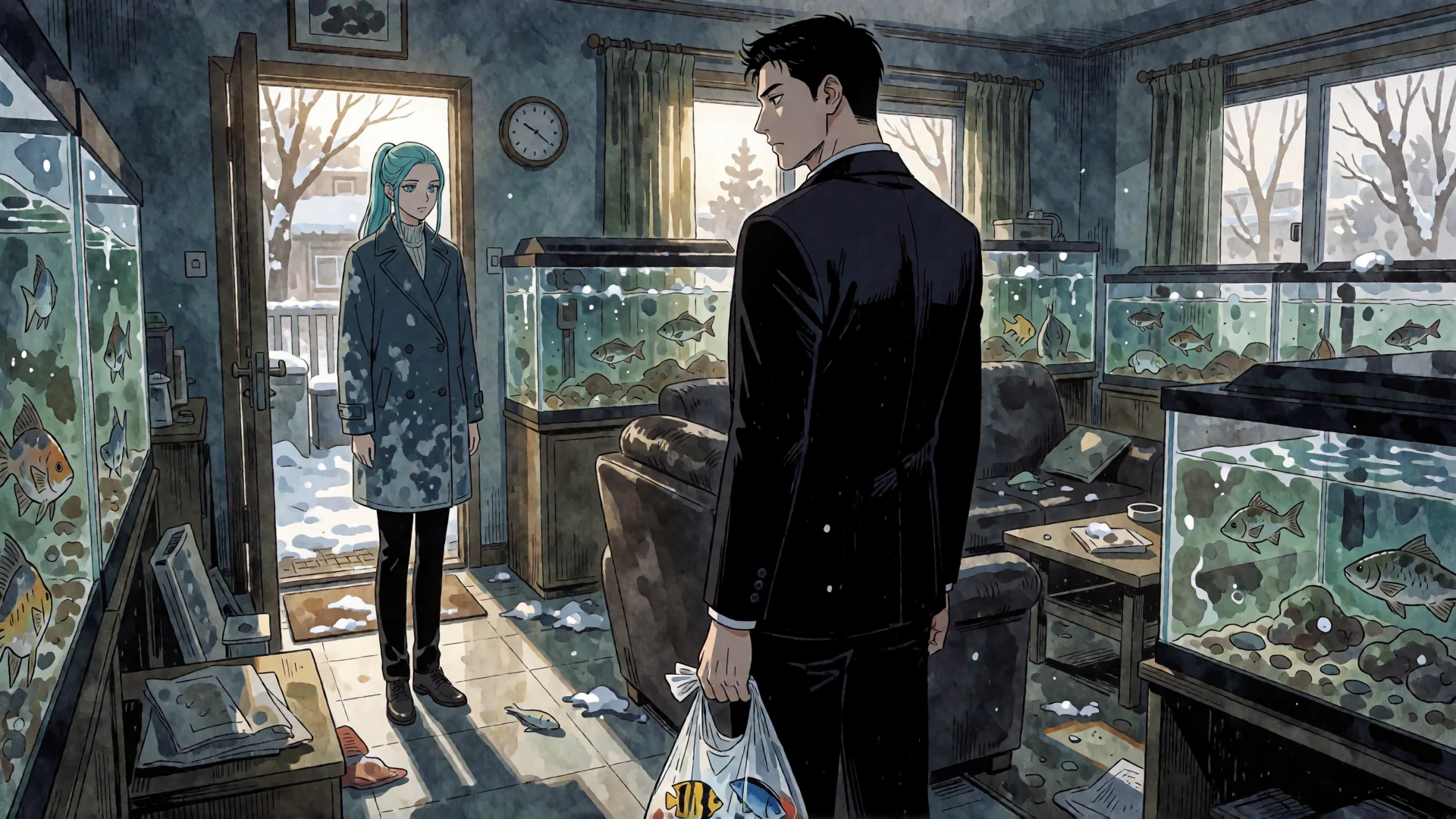
During a National Road Management Corps meeting, Noh Do-hwa announces that the 'Wheel Murderer' has claimed another victim in Cheongju. The protagonist, Go Yuir (Undertaker), and Jeong Ye-ji (Saintess) view a video posted on SG Net by an anonymous user. The video depicts Lee So-yeol, a confessed serial killer, bound to a chair in sewage-filled parking garage, with nails embedded in his hands, arms, and shoulder. The editing suggests torture occurred between cuts, ending with a car wheel embedded in his head, the Wheel Murderer’s signature. The post has garnered mixed public reactions, with some praising the killer as a righteous judge and others questioning his motives. Seo Gyu, administrator of SG Net, joins the meeting, revealing he cannot track the anonymous poster due to apparent stealth abilities that bypass even Clairvoyance. In a subsequent strategy meeting, the group discusses the implications of the Wheel Murderer’s rise. Noh Do-hwa and Seo Gyu debate whether the killer is a vigilante targeting villains or a dangerous anomaly who could turn on anyone. Go Yuir confirms this is unprecedented in all his past cycles and agrees to investigate. The narrative notes the National Road Management Corps’ control over major cities but acknowledges their inability to secure individual communities or handle judicial matters, leaving voids for such anomalies to emerge. After the meeting, Go Yuir decides to visit Jeong Ye-ji, bringing her a gift of tropical fish to cheer her up given the grim public mood. He arrives at her residence in Dongbinggo-dong on Christmas Eve. Inside, he finds her fish tanks empty and murky, with several dead fish floating belly-up. Jeong Ye-ji enters shortly after, claiming she was out for a walk and had returned once earlier. However, Go Yuir notices inconsistencies: her double coat has unnatural snow patterns, and the shoes she removed do not match the footprints in the snow outside. Combining these details with the empty tanks and her vacant demeanor, Go Yuir deduces a disturbing possibility. He directly asks if she is the Wheel Murderer. Following a tense silence, Jeong Ye-ji responds calmly, 'You really know me well,' confirming the accusation.
17:37
Chapter 40
During a National Road Management Corps meeting, Noh Do-hwa announces that the 'Wheel Murderer' has claimed another victim in Cheongju. The protagonist, Go Yuir (Undertaker), and Jeong Ye-ji (Saintess) view a video posted on SG Net by an anonymous user. The video depicts Lee So-yeol, a confessed serial killer, bound to a chair in sewage-filled parking garage, with nails embedded in his hands, arms, and shoulder. The editing suggests torture occurred between cuts, ending with a car wheel embedded in his head, the Wheel Murderer’s signature. The post has garnered mixed public reactions, with some praising the killer as a righteous judge and others questioning his motives. Seo Gyu, administrator of SG Net, joins the meeting, revealing he cannot track the anonymous poster due to apparent stealth abilities that bypass even Clairvoyance. In a subsequent strategy meeting, the group discusses the implications of the Wheel Murderer’s rise. Noh Do-hwa and Seo Gyu debate whether the killer is a vigilante targeting villains or a dangerous anomaly who could turn on anyone. Go Yuir confirms this is unprecedented in all his past cycles and agrees to investigate. The narrative notes the National Road Management Corps’ control over major cities but acknowledges their inability to secure individual communities or handle judicial matters, leaving voids for such anomalies to emerge. After the meeting, Go Yuir decides to visit Jeong Ye-ji, bringing her a gift of tropical fish to cheer her up given the grim public mood. He arrives at her residence in Dongbinggo-dong on Christmas Eve. Inside, he finds her fish tanks empty and murky, with several dead fish floating belly-up. Jeong Ye-ji enters shortly after, claiming she was out for a walk and had returned once earlier. However, Go Yuir notices inconsistencies: her double coat has unnatural snow patterns, and the shoes she removed do not match the footprints in the snow outside. Combining these details with the empty tanks and her vacant demeanor, Go Yuir deduces a disturbing possibility. He directly asks if she is the Wheel Murderer. Following a tense silence, Jeong Ye-ji responds calmly, 'You really know me well,' confirming the accusation.
17:37
 Chapter 41
The narrator, Mr. Undertaker, reflects on a chilling hypothesis: anomalies are not external invasions but mutations of human 'awakeners.' He notes that if an awakener possesses a transformative ability, such as the mother and child who birthed the Udumbara virus in Asan, their power could manifest as a monstrous anomaly. He compares the physical horrors of the Ten Legs and the Saintess’s telepathic observation to standard monster traits, concluding that from an outsider's perspective, both awakened humans and anomalies are equally terrifying.
This philosophical musing is interrupted by the Saintess, who casually confirms she killed the aforementioned individuals. She reveals her motivation: she fabricated the Constellation system—a network of non-existent divine watchers—to instill anxiety in awakeners and restrain their criminal impulses. However, because her telepathy only affects awakeners, she created a separate fear mechanism for ordinary civilians. The Saintess explains that society is full of 'beasts masquerading as humans,' and she executes those who harm others, claiming she has never regretted her actions. She questions Undertaker’s morality, arguing that his ability to regress allows villains to repeatedly offend and be forgiven, whereas his victims endure endless suffering without recourse.
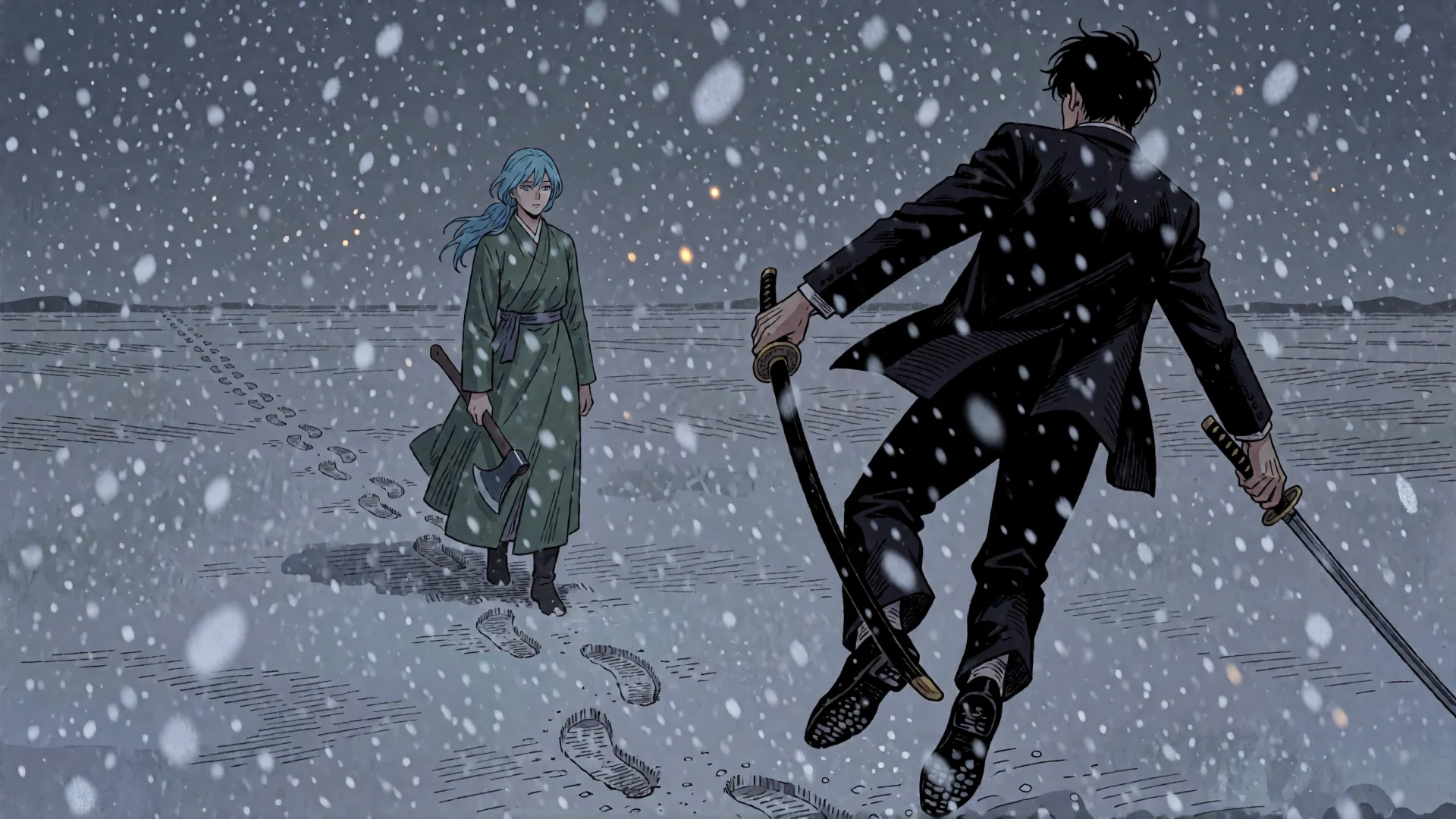
The conversation turns hostile as the Saintess advances on Undertaker, stating that while he may succeed in saving the world, he wrongly grants villains second chances. She declares her intent to create a 'small hell' by eternally punishing sinners across every regression cycle, refusing to let her efforts be undermined by villains benefiting from his resets. Undertaker realizes her sudden combat readiness and the source of her overwhelming power. Recalling a past conversation where she hinted at a secret ability beyond Clairvoyance and Telepathy, he deduces she possesses [Time Stop]. This explains how she monitored numerous awakeners simultaneously and her current ability to dodge his attacks and strike with multiple hand axes from unpredictable angles.
The Saintess confirms her [Time Stop] ability has grown, allowing her to traverse the country and hunt villains during frozen time. She reveals that what Undertaker perceives as a single moment is actually an eternity for her, filled with thousands of her footsteps. As the world appears to stop around Undertaker, the Saintess unleashes a barrage of bullets and aura-infused hand axes from all directions. The narrator identifies her as a Lv.4 Oceanic-class threat, the 'Executioner,' and initiates a boss subjugation battle.
12:07
Chapter 41
The narrator, Mr. Undertaker, reflects on a chilling hypothesis: anomalies are not external invasions but mutations of human 'awakeners.' He notes that if an awakener possesses a transformative ability, such as the mother and child who birthed the Udumbara virus in Asan, their power could manifest as a monstrous anomaly. He compares the physical horrors of the Ten Legs and the Saintess’s telepathic observation to standard monster traits, concluding that from an outsider's perspective, both awakened humans and anomalies are equally terrifying.
This philosophical musing is interrupted by the Saintess, who casually confirms she killed the aforementioned individuals. She reveals her motivation: she fabricated the Constellation system—a network of non-existent divine watchers—to instill anxiety in awakeners and restrain their criminal impulses. However, because her telepathy only affects awakeners, she created a separate fear mechanism for ordinary civilians. The Saintess explains that society is full of 'beasts masquerading as humans,' and she executes those who harm others, claiming she has never regretted her actions. She questions Undertaker’s morality, arguing that his ability to regress allows villains to repeatedly offend and be forgiven, whereas his victims endure endless suffering without recourse.
The conversation turns hostile as the Saintess advances on Undertaker, stating that while he may succeed in saving the world, he wrongly grants villains second chances. She declares her intent to create a 'small hell' by eternally punishing sinners across every regression cycle, refusing to let her efforts be undermined by villains benefiting from his resets. Undertaker realizes her sudden combat readiness and the source of her overwhelming power. Recalling a past conversation where she hinted at a secret ability beyond Clairvoyance and Telepathy, he deduces she possesses [Time Stop]. This explains how she monitored numerous awakeners simultaneously and her current ability to dodge his attacks and strike with multiple hand axes from unpredictable angles.
The Saintess confirms her [Time Stop] ability has grown, allowing her to traverse the country and hunt villains during frozen time. She reveals that what Undertaker perceives as a single moment is actually an eternity for her, filled with thousands of her footsteps. As the world appears to stop around Undertaker, the Saintess unleashes a barrage of bullets and aura-infused hand axes from all directions. The narrator identifies her as a Lv.4 Oceanic-class threat, the 'Executioner,' and initiates a boss subjugation battle.
12:07
 Chapter 42
The narrative begins with the Undertaker’s internal monologue, establishing the context as a retrospective strategy guide for the 'Executioner Route,' the state the Saintess (Jeong Ye-ji) enters after corruption. The Undertaker defines the activation conditions for this route: at least 15 years must have passed, she must have witnessed over one million civilian casualties (specifically 100,000 instances of powerless victims dying), and she must have mastered aura manipulation. The Undertaker emphasizes that the Saintess is a formidable multi-ability awakener and that the optimal strategy is avoidance; however, if engaged, she must be subdued immediately.
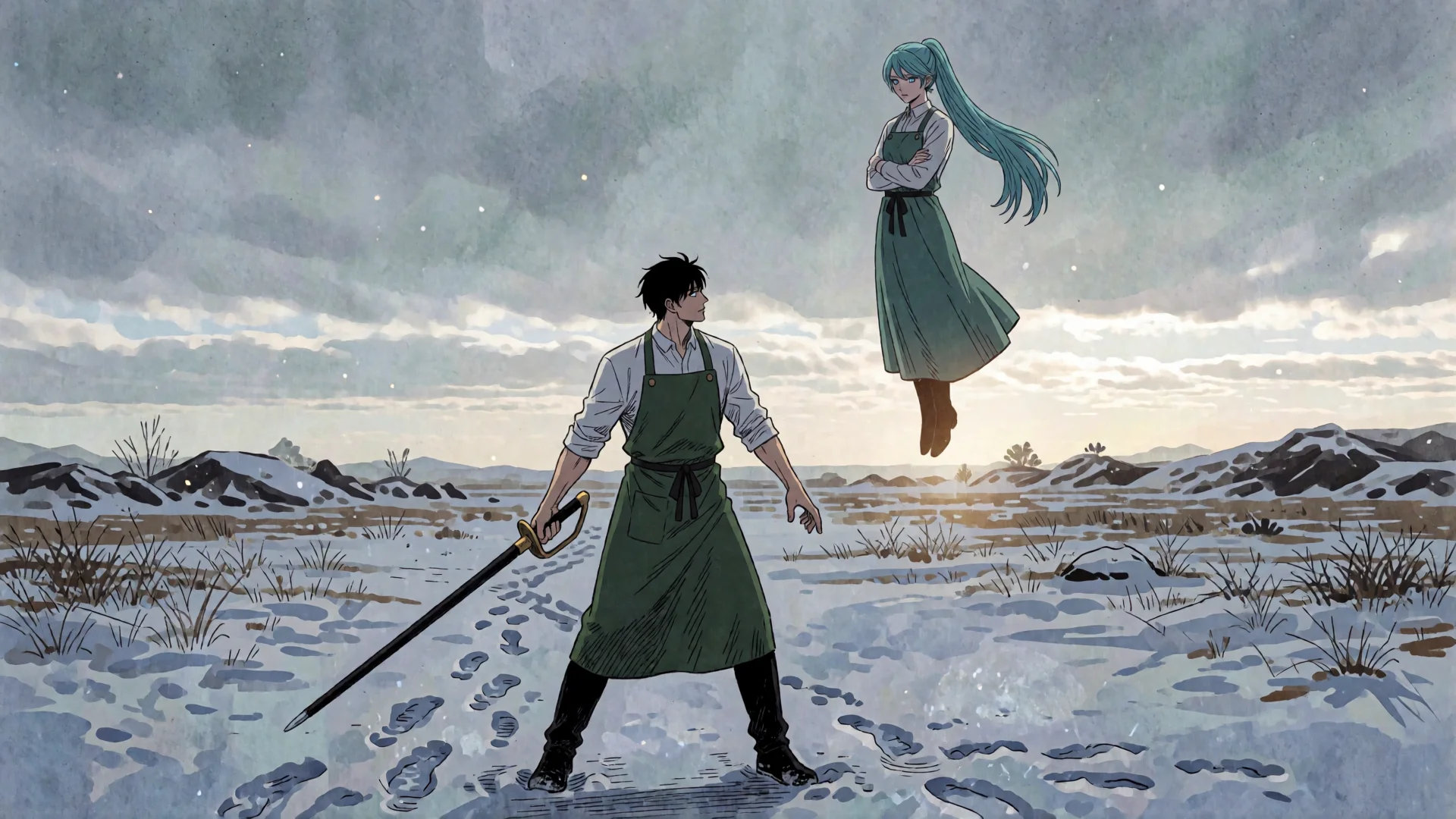
The scene shifts to the present battle, where the Undertaker is under siege by the Saintess. She employs 'Time Stop,' an ability that allows her to act while the Undertaker remains frozen, effectively giving her infinite time to prepare attacks such as thousands of bullets and dozens of axes. The Undertaker uses his aura to mitigate damage but notes its depletion in real-time. The Saintess reveals she took a ten-day break during the time stop to recharge and gather ammunition, indicating that while her time manipulation is powerful, it is not infinite and requires significant mental energy to sustain for long periods. The Undertaker realizes that direct contact likely cancels the time stop, as she has exclusively used long-range attacks.
The Saintess escalates her assault using 'Telepathy' and 'Clairvoyance.' She abuses the telepathy ability to bombard the Undertaker’s mind with traumatic noises—explosions, screeching metal—and the voices of his allies, including Dang Seo-rin, Seo Gyu, and Go Yuri, to induce psychological breakdowns and distract him from dodging the physical barrage. Furthermore, she uses Clairvoyance to broadcast the Undertaker’s location to other strong awakeners, citing his status as a 'target for subjugation' to a Constellation. This alerts numerous other powerful figures, such as the Sword Marquess, to converge on his position, adding a three-hour time limit to the fight. Overwhelmed by the bullet-hell tactics, psychological torture, and incoming reinforcements, the Undertaker abandons the attempt to defeat the Saintess directly. He decides to wipe out all his remaining aura, exposing himself completely, a move that shocks the Saintess as the chapter ends.
11:51
Chapter 42
The narrative begins with the Undertaker’s internal monologue, establishing the context as a retrospective strategy guide for the 'Executioner Route,' the state the Saintess (Jeong Ye-ji) enters after corruption. The Undertaker defines the activation conditions for this route: at least 15 years must have passed, she must have witnessed over one million civilian casualties (specifically 100,000 instances of powerless victims dying), and she must have mastered aura manipulation. The Undertaker emphasizes that the Saintess is a formidable multi-ability awakener and that the optimal strategy is avoidance; however, if engaged, she must be subdued immediately.
The scene shifts to the present battle, where the Undertaker is under siege by the Saintess. She employs 'Time Stop,' an ability that allows her to act while the Undertaker remains frozen, effectively giving her infinite time to prepare attacks such as thousands of bullets and dozens of axes. The Undertaker uses his aura to mitigate damage but notes its depletion in real-time. The Saintess reveals she took a ten-day break during the time stop to recharge and gather ammunition, indicating that while her time manipulation is powerful, it is not infinite and requires significant mental energy to sustain for long periods. The Undertaker realizes that direct contact likely cancels the time stop, as she has exclusively used long-range attacks.
The Saintess escalates her assault using 'Telepathy' and 'Clairvoyance.' She abuses the telepathy ability to bombard the Undertaker’s mind with traumatic noises—explosions, screeching metal—and the voices of his allies, including Dang Seo-rin, Seo Gyu, and Go Yuri, to induce psychological breakdowns and distract him from dodging the physical barrage. Furthermore, she uses Clairvoyance to broadcast the Undertaker’s location to other strong awakeners, citing his status as a 'target for subjugation' to a Constellation. This alerts numerous other powerful figures, such as the Sword Marquess, to converge on his position, adding a three-hour time limit to the fight. Overwhelmed by the bullet-hell tactics, psychological torture, and incoming reinforcements, the Undertaker abandons the attempt to defeat the Saintess directly. He decides to wipe out all his remaining aura, exposing himself completely, a move that shocks the Saintess as the chapter ends.
11:51
 Chapter 43
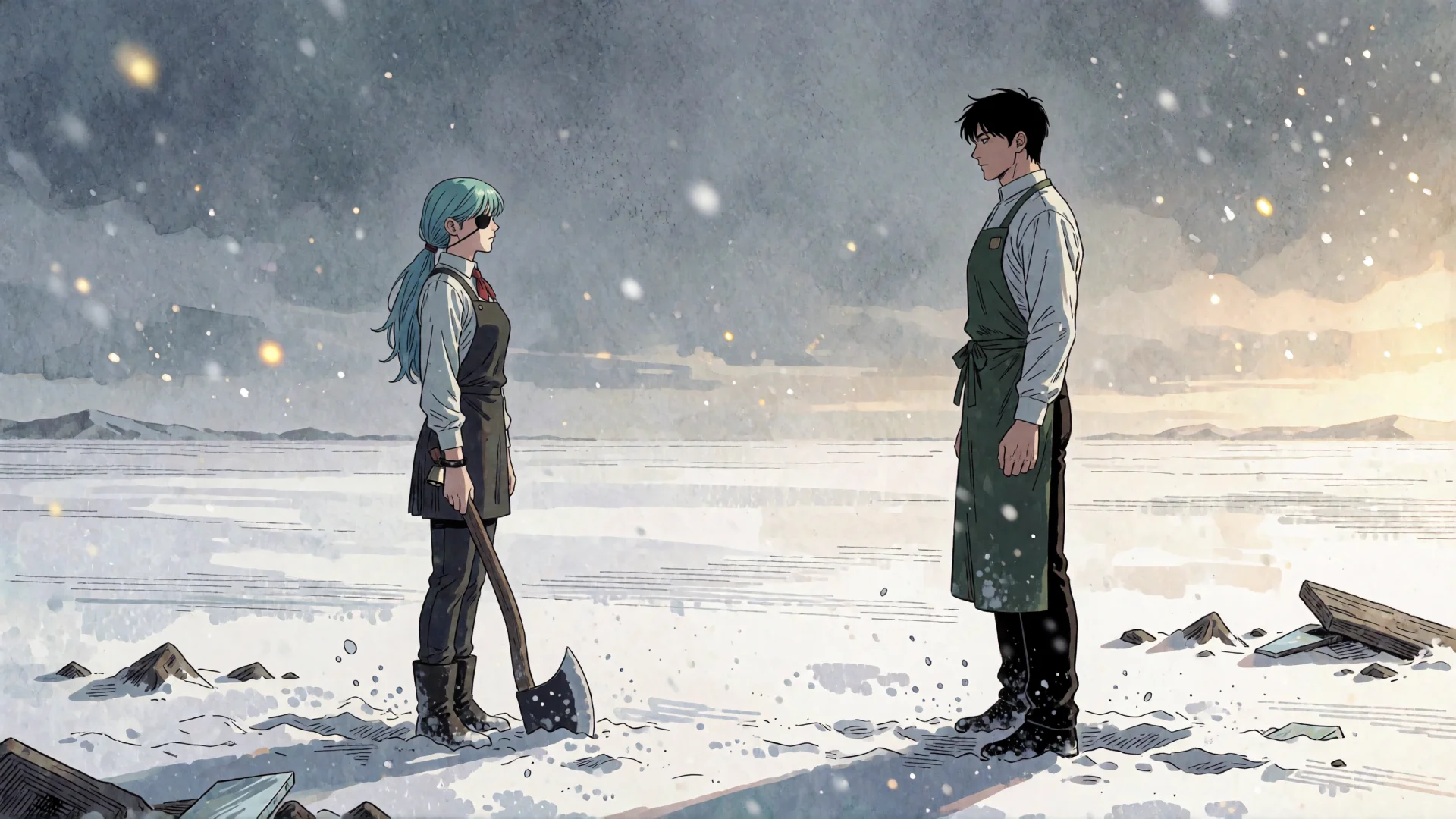
The chapter opens in a frozen, snow-covered world where the Saintess has activated a Time Stop, causing incoming bullets to shatter against an invisible barrier. The protagonist, identified as the Undertaker, confronts her. Though the Saintess initially appears disconcerted, she reveals through her actions that she never intended to kill him, only to subdue him to prevent his interference with her self-appointed role as the 'Executioner' who punishes sinners. The Undertaker issues an ultimatum: release him from the Time Stop, or he will commit suicide immediately. The Saintess complies, dropping her axe into the snow, and the two engage in a tense dialogue. They establish terms: the Undertaker will not stop her executions, and she will not suppress his freedom. The Saintess admits her previous claims of summoning other awakeners were bluffs to induce anxiety in him. She expresses fear that in future regressions, her memories of their sixteen years together will be erased, but the Undertaker promises to remember her, assuring her of his loyalty regardless of the timeline.
The conversation shifts to the nature of the Saintess's power. She explains that as awakeners approach their power's peak, they risk 'corruption,' becoming akin to anomalies. She describes experiencing a 'transparent aura' and a loss of self, where her perception shifted from first-person to a detached, third-person perspective, making her feel disconnected from her own body and humanity. She fears becoming a 'grotesquery' that merely watches the world without feeling. The Undertaker, realizing her desperation to halt the regression before she fully loses herself, embraces her, using his aura to shatter the glass-like barrier of her anomaly. This act warms her, and the Time Stop ends as she accepts his guidance to let go.
In an epilogue set in a different cycle, the Saintess listens to the Undertaker recount these events. She critiques his analysis of corruption as merely psychological, pointing out that he has also regressed extensively without showing signs of corruption, suggesting the phenomenon may be specific to her or unique cases. She critiques his reclusive nature, arguing that his self-imposed isolation stems from a distrust of others rather than diligence. Despite his explanation that killing is a painful truth, she smiles faintly, calling her reasoning a 'secret' as she tends to her fish, maintaining her enigmatic and detached demeanor.
15:40
Chapter 43
The chapter opens in a frozen, snow-covered world where the Saintess has activated a Time Stop, causing incoming bullets to shatter against an invisible barrier. The protagonist, identified as the Undertaker, confronts her. Though the Saintess initially appears disconcerted, she reveals through her actions that she never intended to kill him, only to subdue him to prevent his interference with her self-appointed role as the 'Executioner' who punishes sinners. The Undertaker issues an ultimatum: release him from the Time Stop, or he will commit suicide immediately. The Saintess complies, dropping her axe into the snow, and the two engage in a tense dialogue. They establish terms: the Undertaker will not stop her executions, and she will not suppress his freedom. The Saintess admits her previous claims of summoning other awakeners were bluffs to induce anxiety in him. She expresses fear that in future regressions, her memories of their sixteen years together will be erased, but the Undertaker promises to remember her, assuring her of his loyalty regardless of the timeline.
The conversation shifts to the nature of the Saintess's power. She explains that as awakeners approach their power's peak, they risk 'corruption,' becoming akin to anomalies. She describes experiencing a 'transparent aura' and a loss of self, where her perception shifted from first-person to a detached, third-person perspective, making her feel disconnected from her own body and humanity. She fears becoming a 'grotesquery' that merely watches the world without feeling. The Undertaker, realizing her desperation to halt the regression before she fully loses herself, embraces her, using his aura to shatter the glass-like barrier of her anomaly. This act warms her, and the Time Stop ends as she accepts his guidance to let go.
In an epilogue set in a different cycle, the Saintess listens to the Undertaker recount these events. She critiques his analysis of corruption as merely psychological, pointing out that he has also regressed extensively without showing signs of corruption, suggesting the phenomenon may be specific to her or unique cases. She critiques his reclusive nature, arguing that his self-imposed isolation stems from a distrust of others rather than diligence. Despite his explanation that killing is a painful truth, she smiles faintly, calling her reasoning a 'secret' as she tends to her fish, maintaining her enigmatic and detached demeanor.
15:40
 Chapter 44
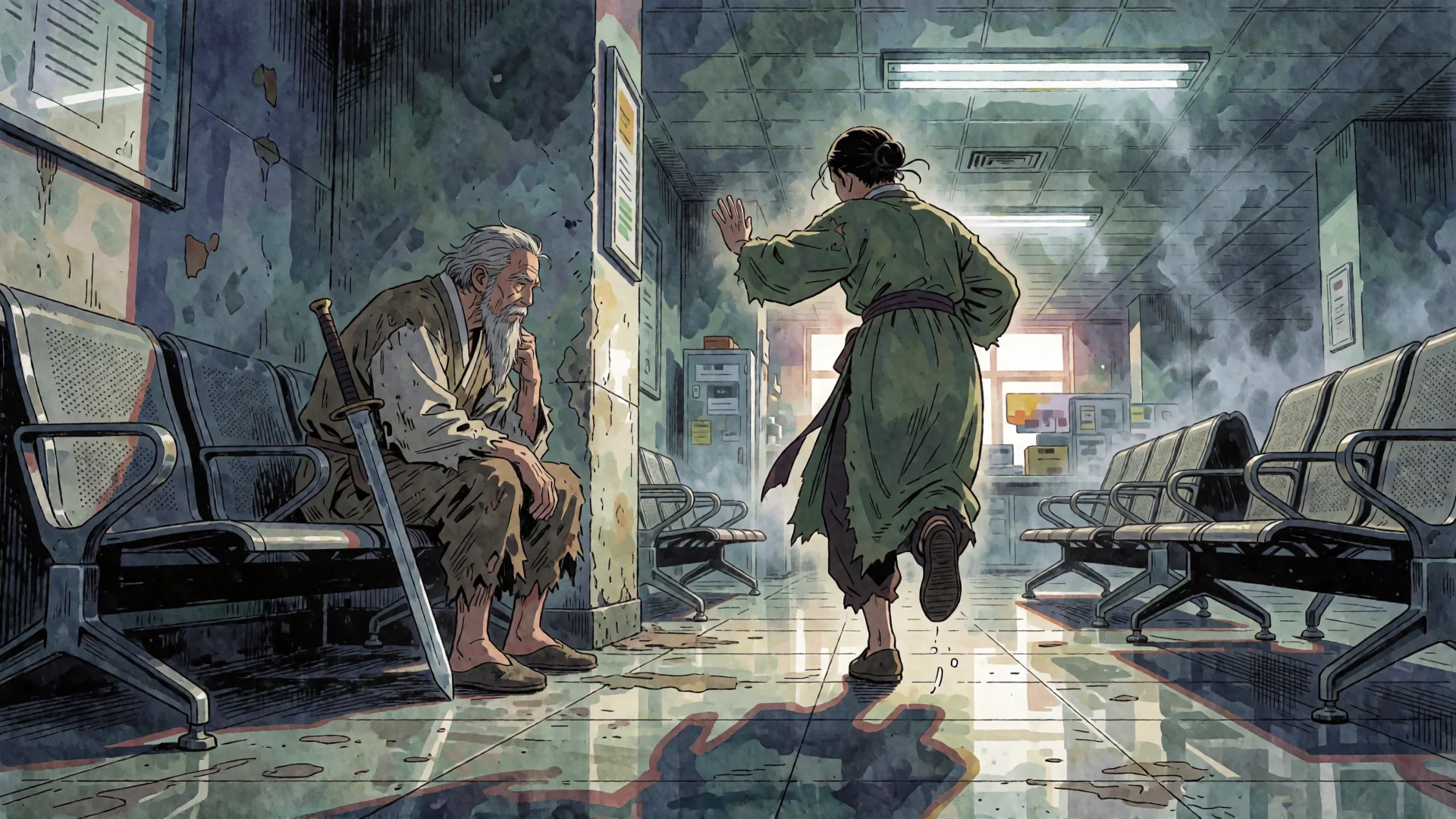
The narrator, identified as the Regressor Undertaker, begins by noting that Korean awakeners are disproportionately eccentric, citing Dang Seo-rin and Cheon Yo-hwa as examples. He reflects on the recent 'Wheel Murderer' case and the corruption of the Saintess, which served as a significant mental blow comparable to being betrayed by Go Yuri in a past cycle. The current narrative focuses on the immediate aftermath of Seo Gyu’s disqualification in Busan Station’s waiting room, triggered by his inability to handle Go Yuri’s hypnosis and his subsequent betrayal of the Saintess’s interests. The Undertaker expresses deep resentment toward Seo Gyu, not just for the betrayal, but for hiding his allegiance with the Saintess, and resolves to punish him by confiscating his favorite food for the next 200 years (10–15 cycles). Following this, Fairy No. 264 approaches the Undertaker, asking what he is doing. He reveals he is planning a vacation since the world is ruined, a response the fairy finds insane before fleeing. This interaction triggers the Undertaker’s memory of a previous conversation with the Saintess, where she claimed that while not all awakeners like him, 50% do, including the strong ones. Pricked by pride, the Undertaker decides to win over even more awakeners in this cycle, specifically targeting the Sword Marquess of Yuldoguk. He describes this old man, who uses the archaic self-reference 'this seat' and wields a fake aluminum sword, as a true madman. The narrator details the Sword Marquess’s history: he purchased a barony in 'Yuldoguk' (Sirland), a micronation established by a British expat based on capitalist principles from the Romance of the Three Kingdoms. After Yuldoguk was destroyed by monsters, the old man revived it as a tributary state and declared himself 'Sword Marquess,' a title that does not actually exist in the nation’s hierarchy. Despite his incompetence in combat—he cannot even use Aura—the Sword Marquess survived because he possesses the SSS-class ability [Plant Growth]. This power allows him to grow crops rapidly anywhere, giving him immense leverage over awakeners who rely on his food supply. He uses this threat to deter harassment from other guilds. Ultimately, the narrator concludes that while the Sword Marquess is crazy, his agricultural prowess makes him an indispensable, untouchable figure in the collapsed Korean peninsula.
13:27
Chapter 44
The narrator, identified as the Regressor Undertaker, begins by noting that Korean awakeners are disproportionately eccentric, citing Dang Seo-rin and Cheon Yo-hwa as examples. He reflects on the recent 'Wheel Murderer' case and the corruption of the Saintess, which served as a significant mental blow comparable to being betrayed by Go Yuri in a past cycle. The current narrative focuses on the immediate aftermath of Seo Gyu’s disqualification in Busan Station’s waiting room, triggered by his inability to handle Go Yuri’s hypnosis and his subsequent betrayal of the Saintess’s interests. The Undertaker expresses deep resentment toward Seo Gyu, not just for the betrayal, but for hiding his allegiance with the Saintess, and resolves to punish him by confiscating his favorite food for the next 200 years (10–15 cycles). Following this, Fairy No. 264 approaches the Undertaker, asking what he is doing. He reveals he is planning a vacation since the world is ruined, a response the fairy finds insane before fleeing. This interaction triggers the Undertaker’s memory of a previous conversation with the Saintess, where she claimed that while not all awakeners like him, 50% do, including the strong ones. Pricked by pride, the Undertaker decides to win over even more awakeners in this cycle, specifically targeting the Sword Marquess of Yuldoguk. He describes this old man, who uses the archaic self-reference 'this seat' and wields a fake aluminum sword, as a true madman. The narrator details the Sword Marquess’s history: he purchased a barony in 'Yuldoguk' (Sirland), a micronation established by a British expat based on capitalist principles from the Romance of the Three Kingdoms. After Yuldoguk was destroyed by monsters, the old man revived it as a tributary state and declared himself 'Sword Marquess,' a title that does not actually exist in the nation’s hierarchy. Despite his incompetence in combat—he cannot even use Aura—the Sword Marquess survived because he possesses the SSS-class ability [Plant Growth]. This power allows him to grow crops rapidly anywhere, giving him immense leverage over awakeners who rely on his food supply. He uses this threat to deter harassment from other guilds. Ultimately, the narrator concludes that while the Sword Marquess is crazy, his agricultural prowess makes him an indispensable, untouchable figure in the collapsed Korean peninsula.
13:27
 Chapter 45
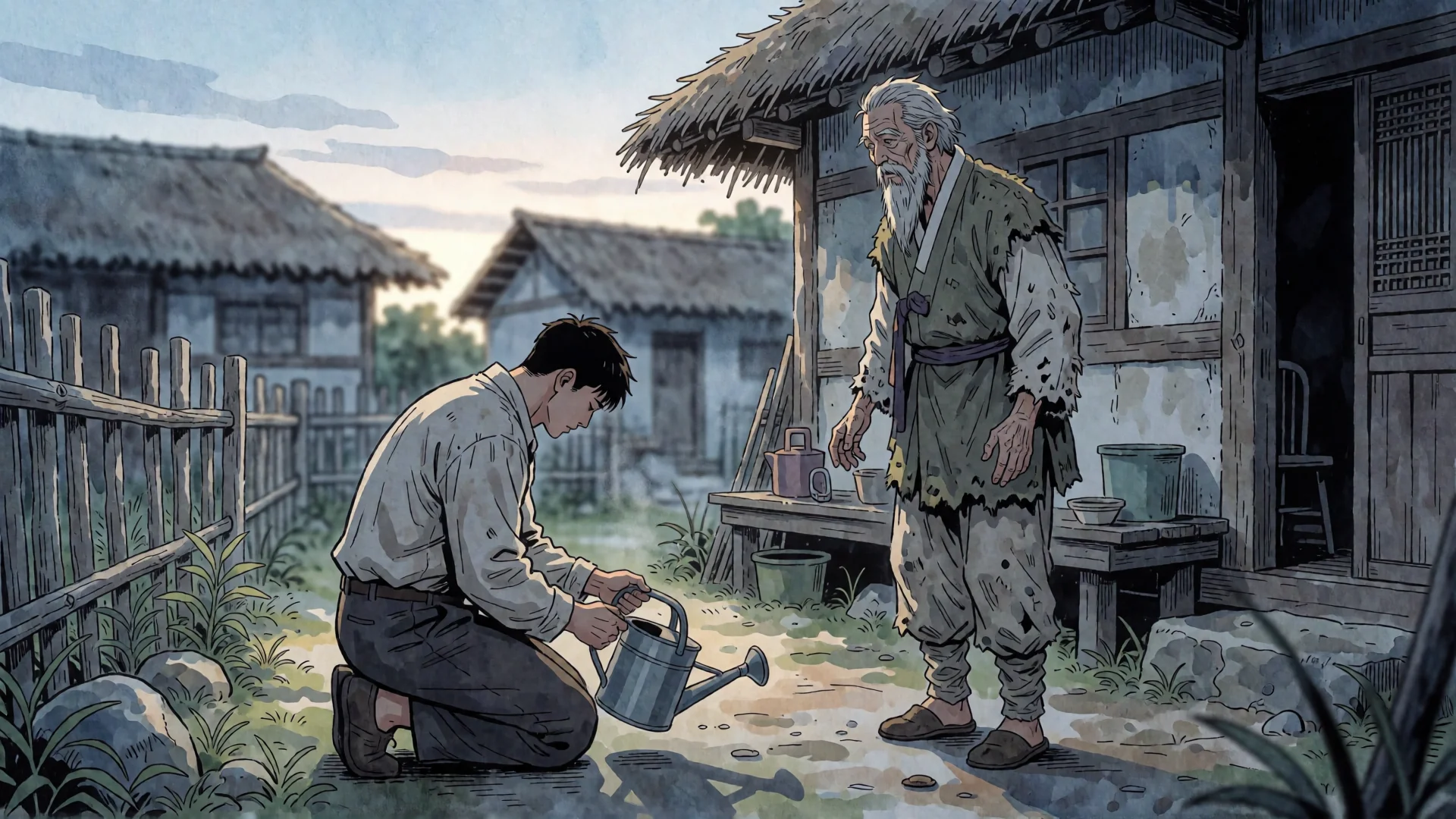
The narrator provides context on the hostile nature of the Void, where genetic mutations and environmental anomalies destroy human civilization's reproducibility. The National Road Management Corps fights this by paving roads and railways to maintain community lines against the Void's chaos. The narrative focuses on the Sword Marquess, a support unit who, despite being mentally unstable, ensures the Corps' food supply. He is a self-proclaimed rightful disciple of the 260th Mount Hua Sect leader, carrying a practice sword and claiming mastery of the Twenty-Four Plum Blossom Sword Technique. He expresses a desperate desire to visit Mount Hua in China, dismissing the narrator's warnings that overseas travel is suicide. When the narrator challenges his lore regarding Mount Hua's plum blossoms, the Sword Marquess reacts defensively, citing his internal injuries and the Demonic Cult as reasons for his inability to demonstrate his skills. Unable to reason with him, the narrator enlists Noh Do-hwa, the head of the National Road Management Corps, to manage him. Noh Do-hwa successfully pacifies the old man by offering him a shoulder massage and using psychological manipulation: she convinces him that as the current leader, his disciples in China should visit him rather than him traveling to them. This deflection satisfies his nostalgic longing, though he still insists on visiting Mount Hua eventually. The narrative jumps forward to the 108th cycle. The narrator visits the Sword Marquess in Ulleungdo, where the old man is living in humble conditions, completely unaware of his past titles. The narrator initiates a roleplay, claiming to be a knight from Yuldoguk and reporting that the country has fallen to the Demonic Cult. He presents the Sword Marquess as the sole surviving noble and begs him to revive the nation by becoming the Duke. Publicly, the Sword Marquess accepts the title, ignoring the curious stares of neighbors. Privately, he thanks the narrator, who he now considers a best friend or 'eldest son,' cementing their bond through the shared delusion.
15:01
Chapter 45
The narrator provides context on the hostile nature of the Void, where genetic mutations and environmental anomalies destroy human civilization's reproducibility. The National Road Management Corps fights this by paving roads and railways to maintain community lines against the Void's chaos. The narrative focuses on the Sword Marquess, a support unit who, despite being mentally unstable, ensures the Corps' food supply. He is a self-proclaimed rightful disciple of the 260th Mount Hua Sect leader, carrying a practice sword and claiming mastery of the Twenty-Four Plum Blossom Sword Technique. He expresses a desperate desire to visit Mount Hua in China, dismissing the narrator's warnings that overseas travel is suicide. When the narrator challenges his lore regarding Mount Hua's plum blossoms, the Sword Marquess reacts defensively, citing his internal injuries and the Demonic Cult as reasons for his inability to demonstrate his skills. Unable to reason with him, the narrator enlists Noh Do-hwa, the head of the National Road Management Corps, to manage him. Noh Do-hwa successfully pacifies the old man by offering him a shoulder massage and using psychological manipulation: she convinces him that as the current leader, his disciples in China should visit him rather than him traveling to them. This deflection satisfies his nostalgic longing, though he still insists on visiting Mount Hua eventually. The narrative jumps forward to the 108th cycle. The narrator visits the Sword Marquess in Ulleungdo, where the old man is living in humble conditions, completely unaware of his past titles. The narrator initiates a roleplay, claiming to be a knight from Yuldoguk and reporting that the country has fallen to the Demonic Cult. He presents the Sword Marquess as the sole surviving noble and begs him to revive the nation by becoming the Duke. Publicly, the Sword Marquess accepts the title, ignoring the curious stares of neighbors. Privately, he thanks the narrator, who he now considers a best friend or 'eldest son,' cementing their bond through the shared delusion.
15:01
 Chapter 46
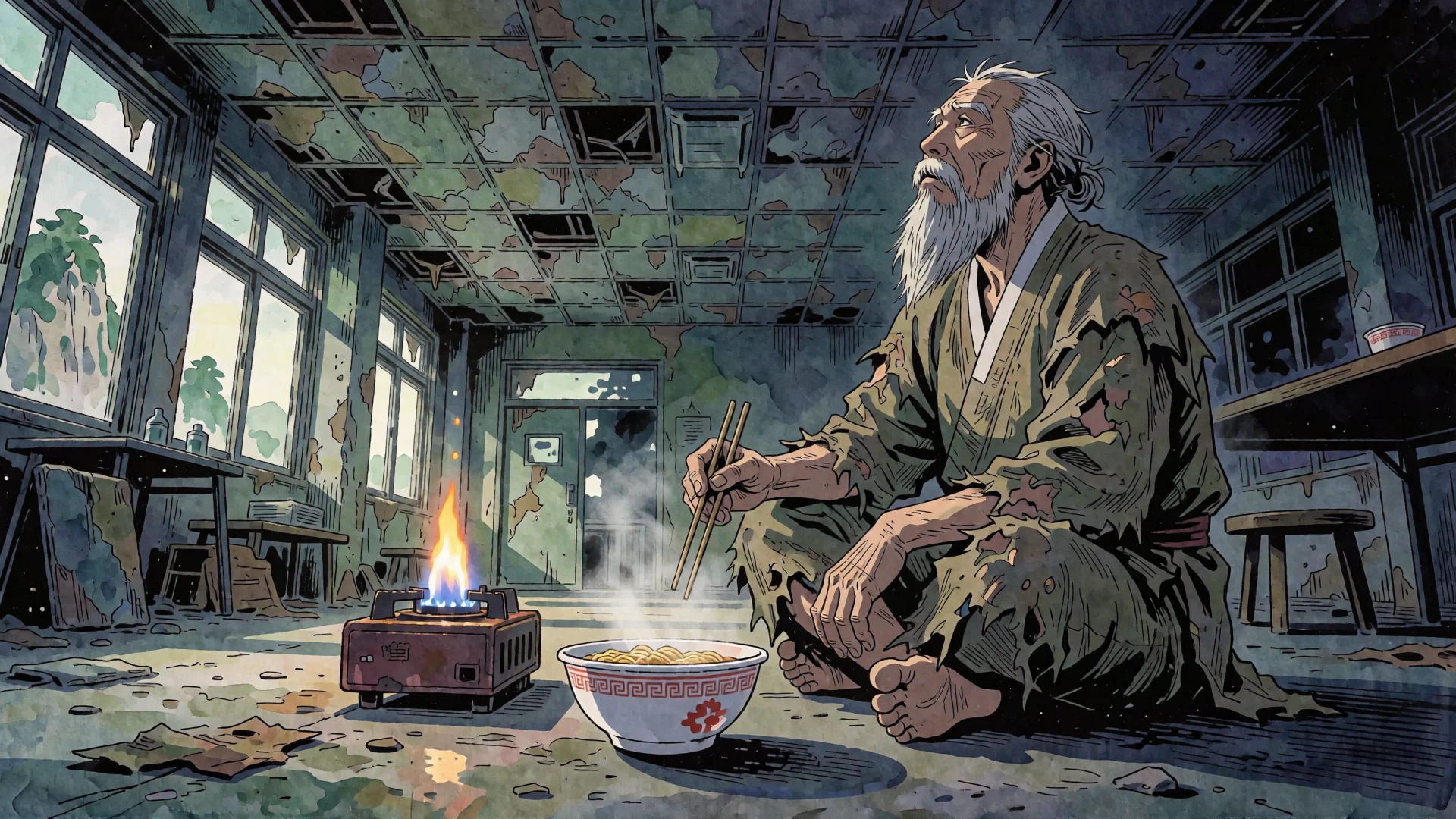
The narrator recalls forming a bond with Sword Marquess after drinking four bottles of makgeolli, swearing an oath of brotherhood that surpassed even the jealousy of the Yu family. The next morning, the narrator claims Sword Marquess confessed to being a direct disciple of the Mount Hua leader. The narrator fabricates this claim to test him, then immediately proposes they return to Mount Hua together. Despite the dangerous state of the martial world due to the Demonic Cult, Sword Marquess agrees, claiming trust based on shared wishes rather than benefit. They depart immediately from Ulleungdo. The journey begins with Sword Marquess suffering from severe seasickness, vomiting repeatedly as the narrator navigates the chaotic post-Gate ports of Incheon to secure passage to Shanghai. The narrator explains the global threat of mythological entities, noting that China is particularly dangerous due to its rich pantheon of monsters like 'Chaos' and 'Greed,' which have destroyed tens of thousands of awakeners. To avoid these entities, the narrator diverts through Chang'an, handling all physical labor, navigation, combat, and translation while carrying Sword Marquess on his back for the majority of the trip. Using a lie about being a filial grandson fulfilling his grandfather's last wish, the narrator gains trust and supplies from locals. After two months, they reach Mount Hua. The narrator reveals that the sect's main hall was destroyed 45 years ago and the ruins are lost. Sword Marquess skillfully deflects the inquiry, focusing instead on the scenic beauty. They settle in a tourist rest area. The narrator cooks ramen, a skill honed over centuries of regression. Sword Marquess praises the food enthusiastically. Having fulfilled Sword Marquess's lifelong wish to visit Mount Hua, the narrator watches him with intense curiosity, unsure if he will seek to rebuild the sect or simply return to Korea. Sword Marquess declares it is time to work, leaving the narrator's predictions unfulfilled.
17:45
Chapter 46
The narrator recalls forming a bond with Sword Marquess after drinking four bottles of makgeolli, swearing an oath of brotherhood that surpassed even the jealousy of the Yu family. The next morning, the narrator claims Sword Marquess confessed to being a direct disciple of the Mount Hua leader. The narrator fabricates this claim to test him, then immediately proposes they return to Mount Hua together. Despite the dangerous state of the martial world due to the Demonic Cult, Sword Marquess agrees, claiming trust based on shared wishes rather than benefit. They depart immediately from Ulleungdo. The journey begins with Sword Marquess suffering from severe seasickness, vomiting repeatedly as the narrator navigates the chaotic post-Gate ports of Incheon to secure passage to Shanghai. The narrator explains the global threat of mythological entities, noting that China is particularly dangerous due to its rich pantheon of monsters like 'Chaos' and 'Greed,' which have destroyed tens of thousands of awakeners. To avoid these entities, the narrator diverts through Chang'an, handling all physical labor, navigation, combat, and translation while carrying Sword Marquess on his back for the majority of the trip. Using a lie about being a filial grandson fulfilling his grandfather's last wish, the narrator gains trust and supplies from locals. After two months, they reach Mount Hua. The narrator reveals that the sect's main hall was destroyed 45 years ago and the ruins are lost. Sword Marquess skillfully deflects the inquiry, focusing instead on the scenic beauty. They settle in a tourist rest area. The narrator cooks ramen, a skill honed over centuries of regression. Sword Marquess praises the food enthusiastically. Having fulfilled Sword Marquess's lifelong wish to visit Mount Hua, the narrator watches him with intense curiosity, unsure if he will seek to rebuild the sect or simply return to Korea. Sword Marquess declares it is time to work, leaving the narrator's predictions unfulfilled.
17:45
 Chapter 47
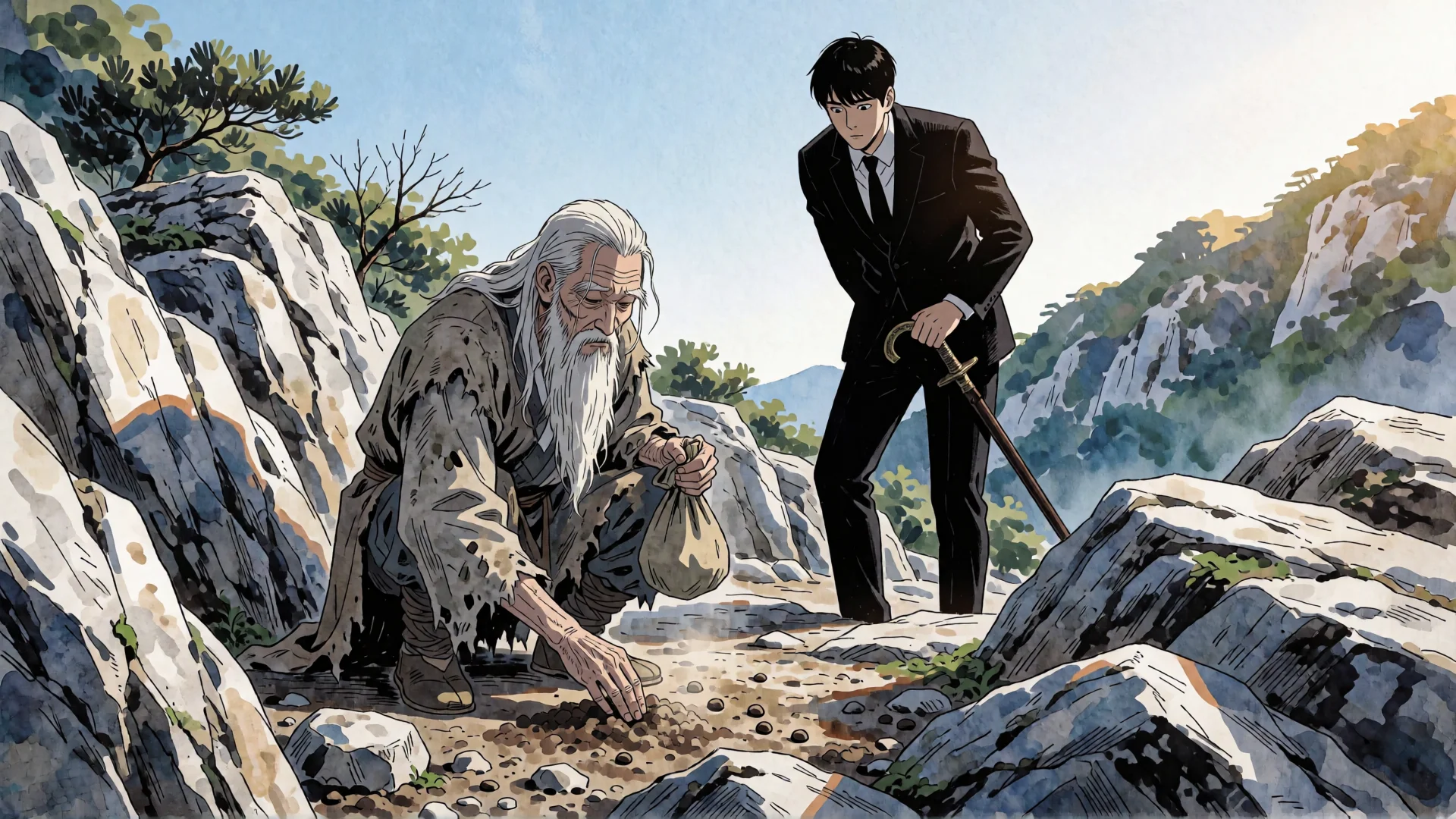
The chapter opens with the Undertaker and Sword Marquess departing from a rest area, with the latter displaying an inexplicable mastery of navigation despite his prior physical frailty. Sword Marquess begins planting seeds in the rocky crevices of Mount Hua, referring to the act as 'reconstruction' or 'restoration.' While the Undertaker doubts the old man's motives and questions his sudden vitality, he follows him as Sword Marquess spends years planting and caring for saplings. During this time, the Undertaker hunts monsters to protect them and earns the moniker 'Taoist of Mount Hua' locally, while Sword Marquess uses his [Plant Growth] ability to accelerate the development of the trees. As seasons change over six years, the saplings transform into plum blossom trees that thrive even in winter, defying natural laws. Sword Marquess spends years grafting and spreading the trees across the mountain's rugged terrain, eventually turning Mount Hua into a vast landscape of red and white plum blossoms. Upon completing this task, Sword Marquess declares, "It is done," and vanishes into the mountain fog while performing a sword dance with a wooden practice sword. The Undertaker searches for him but finds no trace, body, or remains, leading him to entertain the absurd theory that the old man ascended to immortality. The narrative then flashes back to their journey through the 108th cycle in Incheon's Chinatown, where a local Chinese youth mistakes Sword Marquess for a fellow Chinese person and asks for food. Sword Marquess responds fluently in Chinese, offering dumplings, shocking the Undertaker, who is the only one of them who speaks the language. When confronted, Sword Marquess denies understanding Chinese, speaking only Korean, and the Undertaker fails to find the youth or verify the event. The chapter concludes with the Undertaker accepting that he will never know if Sword Marquess truly spoke Chinese or vanished into immortality, accepting only that the martial world is filled with extraordinary eccentrics.
18:18
Chapter 47
The chapter opens with the Undertaker and Sword Marquess departing from a rest area, with the latter displaying an inexplicable mastery of navigation despite his prior physical frailty. Sword Marquess begins planting seeds in the rocky crevices of Mount Hua, referring to the act as 'reconstruction' or 'restoration.' While the Undertaker doubts the old man's motives and questions his sudden vitality, he follows him as Sword Marquess spends years planting and caring for saplings. During this time, the Undertaker hunts monsters to protect them and earns the moniker 'Taoist of Mount Hua' locally, while Sword Marquess uses his [Plant Growth] ability to accelerate the development of the trees. As seasons change over six years, the saplings transform into plum blossom trees that thrive even in winter, defying natural laws. Sword Marquess spends years grafting and spreading the trees across the mountain's rugged terrain, eventually turning Mount Hua into a vast landscape of red and white plum blossoms. Upon completing this task, Sword Marquess declares, "It is done," and vanishes into the mountain fog while performing a sword dance with a wooden practice sword. The Undertaker searches for him but finds no trace, body, or remains, leading him to entertain the absurd theory that the old man ascended to immortality. The narrative then flashes back to their journey through the 108th cycle in Incheon's Chinatown, where a local Chinese youth mistakes Sword Marquess for a fellow Chinese person and asks for food. Sword Marquess responds fluently in Chinese, offering dumplings, shocking the Undertaker, who is the only one of them who speaks the language. When confronted, Sword Marquess denies understanding Chinese, speaking only Korean, and the Undertaker fails to find the youth or verify the event. The chapter concludes with the Undertaker accepting that he will never know if Sword Marquess truly spoke Chinese or vanished into immortality, accepting only that the martial world is filled with extraordinary eccentrics.
18:18
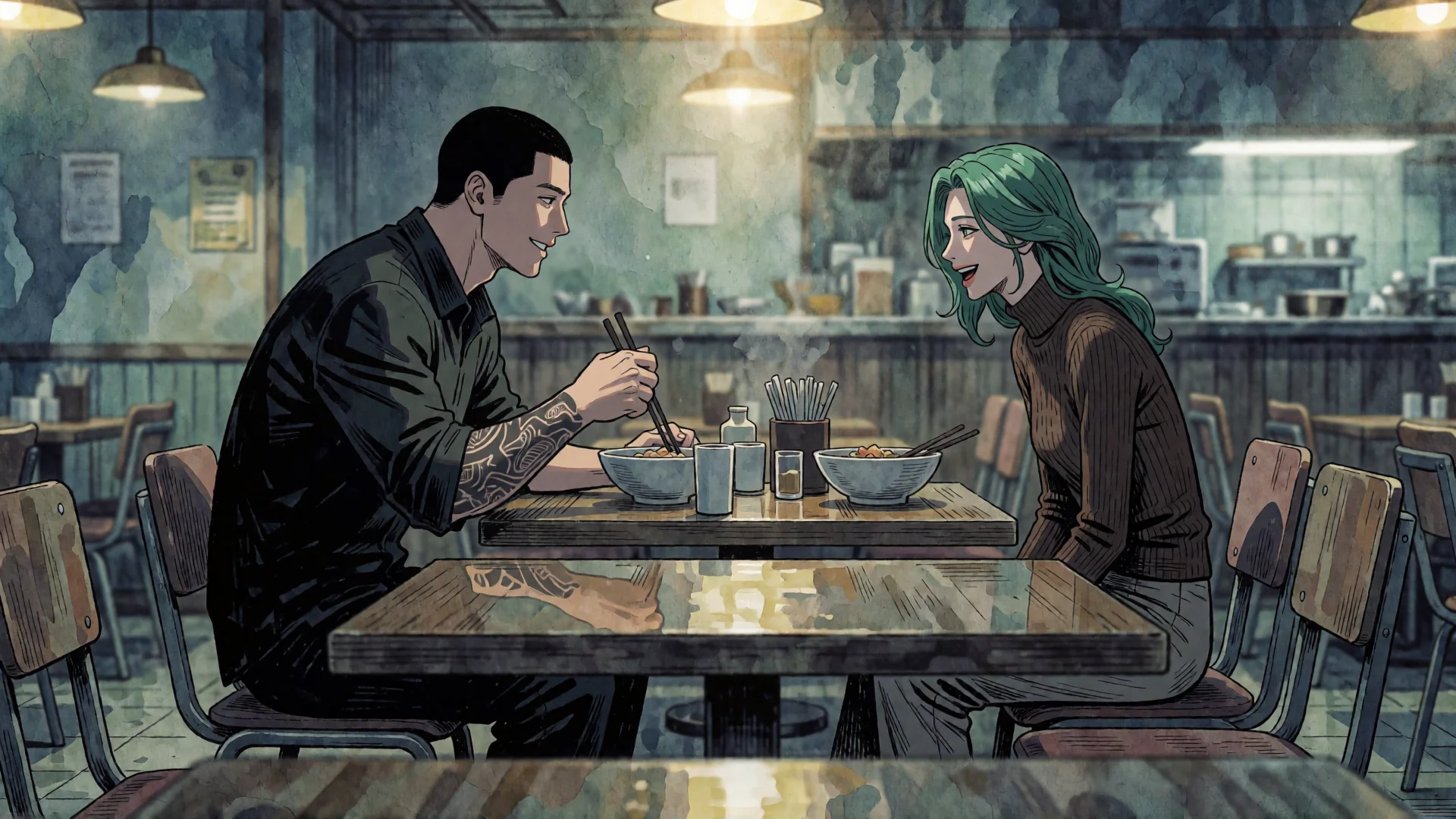 Chapter 48
The narrator, identified as the Undertaker, opens by contrasting traditional Korean pride in athletes and idols with the modern reverence for powerful awakeners. He introduces Cheon Yo-hwa, the 113th Student Council President of Baekwha Girls' High School, noting her dual status as a rare high school student and the only Necromancer on the Korean Peninsula. The narrative then shifts to a scene within the guild, where the Undertaker observes an unusual interaction between Seo Gyu and Sim Ah-ryeon, who are laughing together during lunch. This is noted as a rarity given Seo Gyu’s anger management issues and Sim Ah-ryeon’s social media addiction, both of which typically hinder social bonding. When questioned by the guild leader, Seo Gyu explains that he and Sim Ah-ryeon are friends because they share a 'Void Connection'—specifically, they both awakened at Busan Station. The guild leader expresses skepticism, arguing that such connections are inferior to traditional bonds like school ties or aura training, but the younger members dismiss his concerns. Sim Ah-ryeon defends the Void Connection, suggesting that sharing a traumatic awakening experience creates a deep, unique bond among survivors. The Undertaker internally rejects this logic, recalling that he did not struggle alongside his peers but rather alongside the Sword Marquess, Emit Schopenhauer, through countless regression cycles in the dangerous 'world' Void rather than a specific location. The discussion turns to other prestigious Void Connections. After dismissing Busan Station as the top spot, Sim Ah-ryeon suggests Baekwha Girls' High School. The narrator elaborates on the school's history, noting its colonial-era origins and sailor uniforms, before detailing the tragic Void event that trapped the school for 11 months (subjectively felt as four years). Of the 750 students, only 19 survived initially, with two more committing suicide shortly after. The narrator frames this survival rate not as a tragedy but as a miraculous achievement. He reveals that Cheon Yo-hwa was the central figure who rallied these survivors. Unlike a passive leader, Cheon Yo-hwa actively used her exceptional interpersonal, organizational, and psychological manipulation skills to forge unbreakable loyalty. Within four years, she secured 17 awakened followers who would die for her. The chapter concludes with the image of Cheon Yo-hwa leading these loyalists out of the Void, having transformed the school’s trauma into a powerful, cult-like faction.
12:19
Chapter 48
The narrator, identified as the Undertaker, opens by contrasting traditional Korean pride in athletes and idols with the modern reverence for powerful awakeners. He introduces Cheon Yo-hwa, the 113th Student Council President of Baekwha Girls' High School, noting her dual status as a rare high school student and the only Necromancer on the Korean Peninsula. The narrative then shifts to a scene within the guild, where the Undertaker observes an unusual interaction between Seo Gyu and Sim Ah-ryeon, who are laughing together during lunch. This is noted as a rarity given Seo Gyu’s anger management issues and Sim Ah-ryeon’s social media addiction, both of which typically hinder social bonding. When questioned by the guild leader, Seo Gyu explains that he and Sim Ah-ryeon are friends because they share a 'Void Connection'—specifically, they both awakened at Busan Station. The guild leader expresses skepticism, arguing that such connections are inferior to traditional bonds like school ties or aura training, but the younger members dismiss his concerns. Sim Ah-ryeon defends the Void Connection, suggesting that sharing a traumatic awakening experience creates a deep, unique bond among survivors. The Undertaker internally rejects this logic, recalling that he did not struggle alongside his peers but rather alongside the Sword Marquess, Emit Schopenhauer, through countless regression cycles in the dangerous 'world' Void rather than a specific location. The discussion turns to other prestigious Void Connections. After dismissing Busan Station as the top spot, Sim Ah-ryeon suggests Baekwha Girls' High School. The narrator elaborates on the school's history, noting its colonial-era origins and sailor uniforms, before detailing the tragic Void event that trapped the school for 11 months (subjectively felt as four years). Of the 750 students, only 19 survived initially, with two more committing suicide shortly after. The narrator frames this survival rate not as a tragedy but as a miraculous achievement. He reveals that Cheon Yo-hwa was the central figure who rallied these survivors. Unlike a passive leader, Cheon Yo-hwa actively used her exceptional interpersonal, organizational, and psychological manipulation skills to forge unbreakable loyalty. Within four years, she secured 17 awakened followers who would die for her. The chapter concludes with the image of Cheon Yo-hwa leading these loyalists out of the Void, having transformed the school’s trauma into a powerful, cult-like faction.
12:19
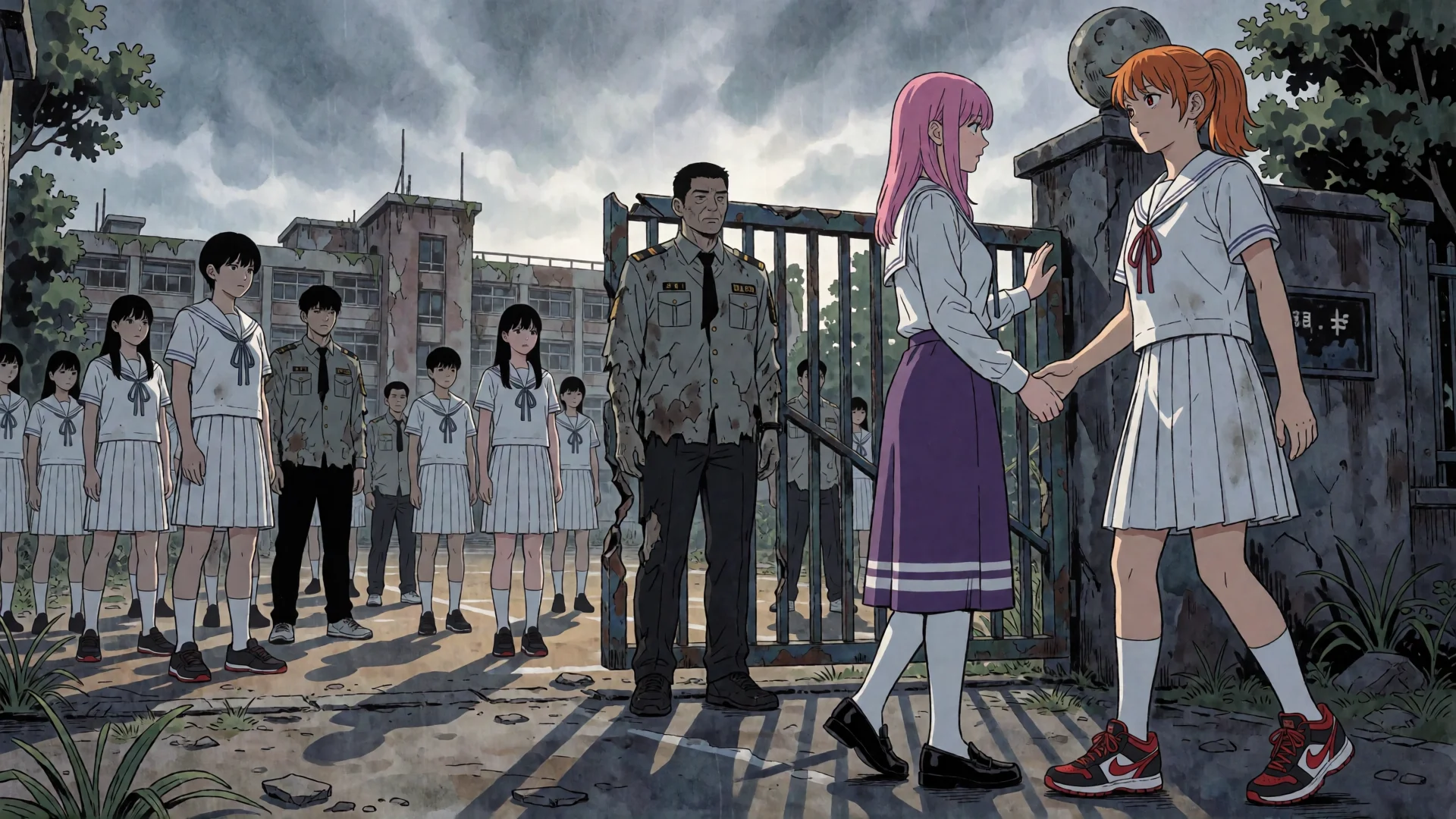 Chapter 49
The narrator, acting as the vice guild leader of Samcheon World Guild, is summoned by Dang Seo-rin to investigate Baekwha Girls' High. Seo-rin, accompanied by her black cat, reveals that the school, which vanished into a Gate for a year, has reopened with approximately 20 survivors. She suspects these survivors, all high school students, may include a powerful, once-in-a-generation Awakener. The narrator is tasked with scouting for talent to recruit into the guild, with the caveat that character flaws might disqualify even exceptional abilities. Arriving at the school, the narrator finds a dilapidated, abandoned building serving as the guild headquarters. The grounds are guarded by zombies with smashed skulls who politely enforce strict entry rules. When the narrator identifies himself as a representative of Samcheon World Guild and requests to see the leader, the zombie guards inform him that the Student Council President is in class. The narrator, sensing extreme danger through his regressor's instinct, waits outside as a zombie guard eerily vocalizes school bell sounds. Dozens of zombie students in uniform emerge, chanting the same sounds, before Cheon Yo-hwa, the Student Council President, appears. Dressed in a school uniform with orange hair but possessing hollow, shadowed eyes, she is completely unaware of the concept of 'guilds' or 'awakeners,' mistaking the narrator for an otaku. When the narrator slips up by referring to the guards as 'zombies' and suggesting they leave the crumbling school, Cheon Yo-hwa abruptly orders him to leave. In a sudden twist, she grabs him, offers him a job as a guard or a basketball player, and releases him when he flees. The entities do not pursue him beyond the school gate. The narrator reports back to Dang Seo-rin, describing the students as insane but noting they do not venture out. Seo-rin decides to avoid conflict unless necessary. However, word spreads that Baekwha Girls' High possesses a Necromancer. Other guild leaders, blinded by greed and desire for power, dismiss the narrator's warnings and send emissaries to recruit Cheon Yo-hwa. Instead of recruiting, the school absorbs these emissaries, turning them into zombies or staff members who have lost their memories and former identities. Enraged guild leaders attack the school but are similarly defeated and absorbed. The influx of new 'students' strains the school's resources, prompting Cheon Yo-hwa to expand the school's territory by integrating surrounding shops and businesses into the school's surreal economy, where zombies trade invisible currency and human flesh for food. The school begins to aggressively recruit civilians for 'experiential learning,' transforming the area around the abandoned school into an unprecedented academy city.
18:42
Chapter 49
The narrator, acting as the vice guild leader of Samcheon World Guild, is summoned by Dang Seo-rin to investigate Baekwha Girls' High. Seo-rin, accompanied by her black cat, reveals that the school, which vanished into a Gate for a year, has reopened with approximately 20 survivors. She suspects these survivors, all high school students, may include a powerful, once-in-a-generation Awakener. The narrator is tasked with scouting for talent to recruit into the guild, with the caveat that character flaws might disqualify even exceptional abilities. Arriving at the school, the narrator finds a dilapidated, abandoned building serving as the guild headquarters. The grounds are guarded by zombies with smashed skulls who politely enforce strict entry rules. When the narrator identifies himself as a representative of Samcheon World Guild and requests to see the leader, the zombie guards inform him that the Student Council President is in class. The narrator, sensing extreme danger through his regressor's instinct, waits outside as a zombie guard eerily vocalizes school bell sounds. Dozens of zombie students in uniform emerge, chanting the same sounds, before Cheon Yo-hwa, the Student Council President, appears. Dressed in a school uniform with orange hair but possessing hollow, shadowed eyes, she is completely unaware of the concept of 'guilds' or 'awakeners,' mistaking the narrator for an otaku. When the narrator slips up by referring to the guards as 'zombies' and suggesting they leave the crumbling school, Cheon Yo-hwa abruptly orders him to leave. In a sudden twist, she grabs him, offers him a job as a guard or a basketball player, and releases him when he flees. The entities do not pursue him beyond the school gate. The narrator reports back to Dang Seo-rin, describing the students as insane but noting they do not venture out. Seo-rin decides to avoid conflict unless necessary. However, word spreads that Baekwha Girls' High possesses a Necromancer. Other guild leaders, blinded by greed and desire for power, dismiss the narrator's warnings and send emissaries to recruit Cheon Yo-hwa. Instead of recruiting, the school absorbs these emissaries, turning them into zombies or staff members who have lost their memories and former identities. Enraged guild leaders attack the school but are similarly defeated and absorbed. The influx of new 'students' strains the school's resources, prompting Cheon Yo-hwa to expand the school's territory by integrating surrounding shops and businesses into the school's surreal economy, where zombies trade invisible currency and human flesh for food. The school begins to aggressively recruit civilians for 'experiential learning,' transforming the area around the abandoned school into an unprecedented academy city.
18:42
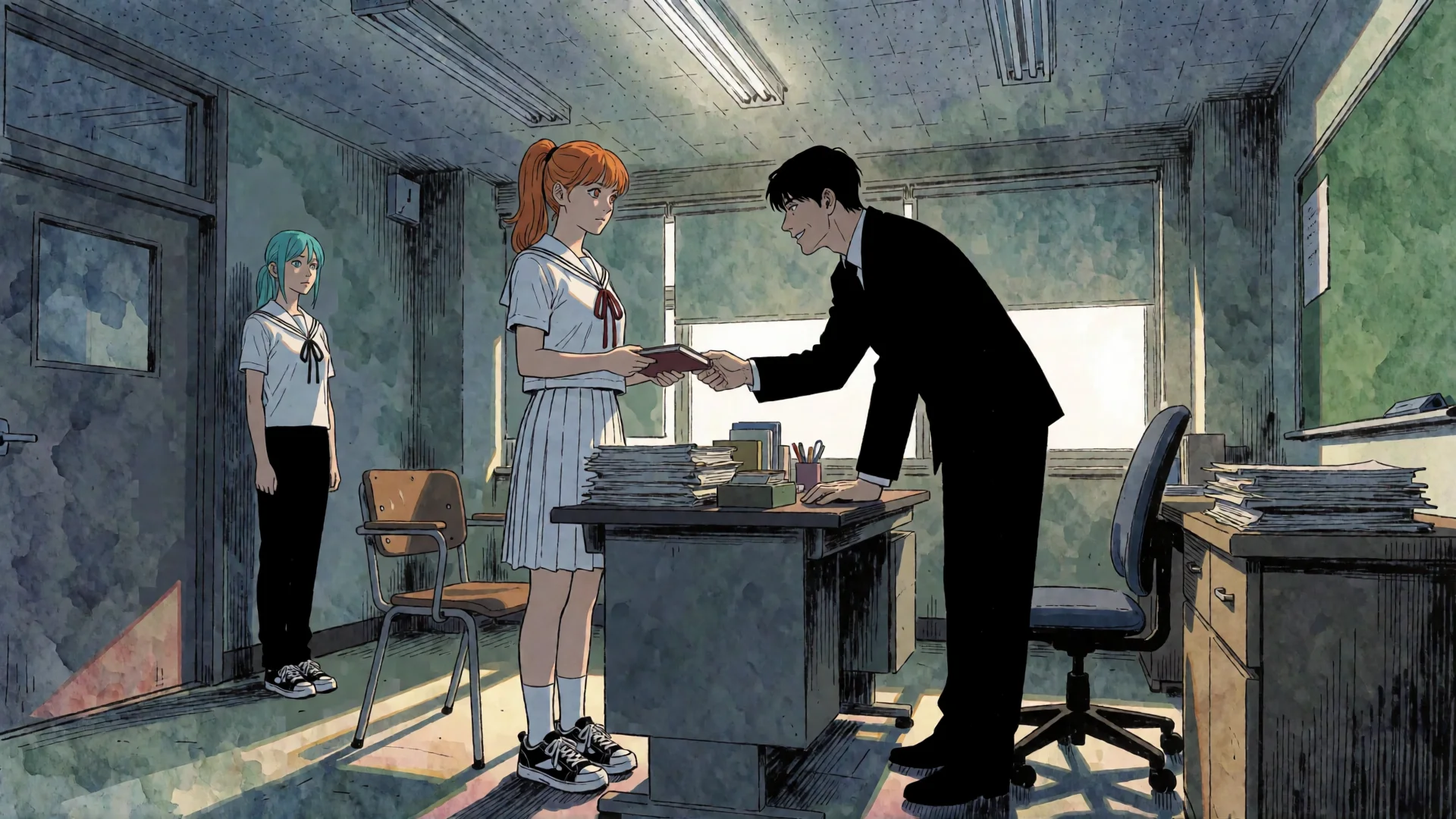 Chapter 50
The narrator, operating under the alias Undertaker, reflects on the nature of the academy city, a surreal and economically powerful entity centered at Baekwha Girls' High, which emerged from a Gate. While previous guilds were seduced by the prospect of recruiting the school's Necromancer, Cheon Yo-hwa, Undertaker established a 'Three Don'ts Policy'—do not look, do not care, do not engage—securing the school with yellow safety tapes after subduing the Ten Legs in the 10th cycle. Following a vacation in the 108th cycle alongside Sword Marquess, Undertaker returns to the Korean Peninsula, now viewing Cheon Yo-hwa as a 'rational conversational partner' compared to the 'lunatic' Sword Marquess. To infiltrate the sealed academy, Undertaker approaches the gate wearing a forged Board of Education printout claiming to be a 99th alumnus attending an alumni meeting. When challenged by a zombie guard for being male, Undertaker absurdly claims to have 'TS disease' (gender transition ability), confusing the NPC into allowing entry and requesting to wait for the manager. Inside the student council room, Undertaker faces Cheon Yo-hwa and her guild members, who are initially skeptical. They test Undertaker’s claimed alumni status by asking questions only a graduate would know, such as the dormitory name, cafeteria location, and discipline director's nickname. Through the Saintess of the East, who provides clairvoyant assistance, Undertaker answers correctly, citing names like Han Ye-sol and Park Ha-yoon. Rather than exposing the deception, Undertaker turns the tables by aggressively questioning Cheon Yo-hwa’s leadership and academic standards, invoking the pressure of Seoul National University admissions. Overwhelmed by this authoritative 'sunbae' (senior) dynamic and bound by the school's social hierarchy, Cheon Yo-hwa capitulates. The chapter concludes with Cheon Yo-hwa formally accepting Undertaker’s identity as a senior alumnus, marking a successful infiltration and the establishment of a new, compliant relationship between the regressor and the Necromancer.
Guest access includes first 49 of 485 audio chapters. Sign in for Free access.
12:39
Chapter 50
The narrator, operating under the alias Undertaker, reflects on the nature of the academy city, a surreal and economically powerful entity centered at Baekwha Girls' High, which emerged from a Gate. While previous guilds were seduced by the prospect of recruiting the school's Necromancer, Cheon Yo-hwa, Undertaker established a 'Three Don'ts Policy'—do not look, do not care, do not engage—securing the school with yellow safety tapes after subduing the Ten Legs in the 10th cycle. Following a vacation in the 108th cycle alongside Sword Marquess, Undertaker returns to the Korean Peninsula, now viewing Cheon Yo-hwa as a 'rational conversational partner' compared to the 'lunatic' Sword Marquess. To infiltrate the sealed academy, Undertaker approaches the gate wearing a forged Board of Education printout claiming to be a 99th alumnus attending an alumni meeting. When challenged by a zombie guard for being male, Undertaker absurdly claims to have 'TS disease' (gender transition ability), confusing the NPC into allowing entry and requesting to wait for the manager. Inside the student council room, Undertaker faces Cheon Yo-hwa and her guild members, who are initially skeptical. They test Undertaker’s claimed alumni status by asking questions only a graduate would know, such as the dormitory name, cafeteria location, and discipline director's nickname. Through the Saintess of the East, who provides clairvoyant assistance, Undertaker answers correctly, citing names like Han Ye-sol and Park Ha-yoon. Rather than exposing the deception, Undertaker turns the tables by aggressively questioning Cheon Yo-hwa’s leadership and academic standards, invoking the pressure of Seoul National University admissions. Overwhelmed by this authoritative 'sunbae' (senior) dynamic and bound by the school's social hierarchy, Cheon Yo-hwa capitulates. The chapter concludes with Cheon Yo-hwa formally accepting Undertaker’s identity as a senior alumnus, marking a successful infiltration and the establishment of a new, compliant relationship between the regressor and the Necromancer.
Guest access includes first 49 of 485 audio chapters. Sign in for Free access.
12:39
 Chapter 51
The Undertaker and Noh Do-hwa discuss the strategic value of Cheon Yo-hwa, the newly appointed student council president of Baekwha Girls' High. The Undertaker explains that Yo-hwa’s necromancy provides a stable, disposable workforce, crucial for the National Road Management Corps (NRMC), which suffers high casualty rates in the Void. To integrate Yo-hwa and other NRMC members into the school's social structure, the Undertaker provides forged graduation albums and detailed lore about Baekwha Girls' High, instructing Do-hwa and the Saintess (Jeong Ye-ji) to act as graduates. Upon meeting the student council, Do-hwa is shocked by their extreme violence; six NRMC members are killed and preserved as 'canned' food after offending Cheon Yo-hwa. Realizing the danger, Do-hwa adapts by leveraging the school's hierarchy, treating Yo-hwa as a junior ('hubae') and issuing orders as a senior ('sunbae'). The Undertaker reinforces this by forging a Seoul National University admission certificate, successfully binding Yo-hwa to their authority through the school's strict tradition. With the zombies proving effective as scouts and laborers, reducing NRMC disappearance rates to under 5%, Do-hwa reclassifies the undead as 'NPCs' or AI rather than mere corpses. Recognizing the potential for automating administrative tasks, she asks the Undertaker to summon Great Witch Dang Seo-rin. Do-hwa presents Dang Seo-rin with massive legal textbooks and requests she use her Cursed Song to recite them aloud, creating an automated data source. The Undertaker then has Cheon Yo-hwa program three zombie guards with the specific instruction to memorize the audio of the recited legal texts. Do-hwa reveals her ultimate goal: to use these data-logging zombies to establish a court, effectively creating AI judges to streamline the NRMC's legal operations.
Guest access includes first 49 of 485 audio chapters. Sign in for Free access.
13:20
Chapter 51
The Undertaker and Noh Do-hwa discuss the strategic value of Cheon Yo-hwa, the newly appointed student council president of Baekwha Girls' High. The Undertaker explains that Yo-hwa’s necromancy provides a stable, disposable workforce, crucial for the National Road Management Corps (NRMC), which suffers high casualty rates in the Void. To integrate Yo-hwa and other NRMC members into the school's social structure, the Undertaker provides forged graduation albums and detailed lore about Baekwha Girls' High, instructing Do-hwa and the Saintess (Jeong Ye-ji) to act as graduates. Upon meeting the student council, Do-hwa is shocked by their extreme violence; six NRMC members are killed and preserved as 'canned' food after offending Cheon Yo-hwa. Realizing the danger, Do-hwa adapts by leveraging the school's hierarchy, treating Yo-hwa as a junior ('hubae') and issuing orders as a senior ('sunbae'). The Undertaker reinforces this by forging a Seoul National University admission certificate, successfully binding Yo-hwa to their authority through the school's strict tradition. With the zombies proving effective as scouts and laborers, reducing NRMC disappearance rates to under 5%, Do-hwa reclassifies the undead as 'NPCs' or AI rather than mere corpses. Recognizing the potential for automating administrative tasks, she asks the Undertaker to summon Great Witch Dang Seo-rin. Do-hwa presents Dang Seo-rin with massive legal textbooks and requests she use her Cursed Song to recite them aloud, creating an automated data source. The Undertaker then has Cheon Yo-hwa program three zombie guards with the specific instruction to memorize the audio of the recited legal texts. Do-hwa reveals her ultimate goal: to use these data-logging zombies to establish a court, effectively creating AI judges to streamline the NRMC's legal operations.
Guest access includes first 49 of 485 audio chapters. Sign in for Free access.
13:20
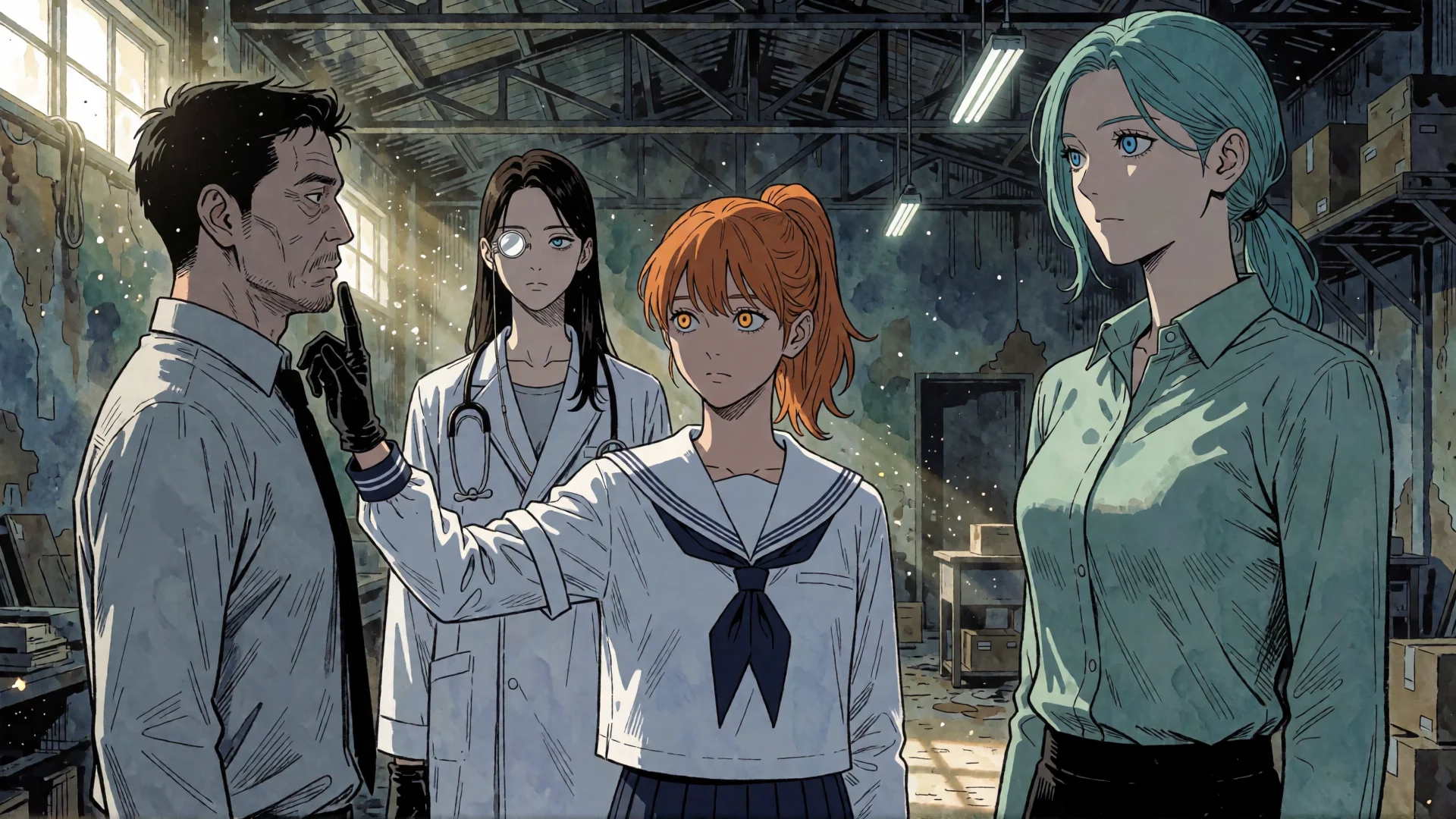 Chapter 52
In a devastated post-apocalyptic setting, Noh Do-hwa and the narrator discuss the feasibility of using an NPC to serve as a judge. Noh Do-hwa, displaying sly excitement, proposes programming NPCs with legal texts to function as an impartial court system, contrasting this with the current reality where local tyrants and guild leaders rule like warlords, often delivering unjust verdicts. While places like Busan enjoy stability under Dang Seo-rin’s intelligence and political acumen, most other cities suffer from unreasonable rulings. Noh Do-hwa estimates that inputting the law books will take about a month. One month later, Noh Do-hwa, the narrator, the Saintess (Jeong Ye-ji), and Cheon Yo-hwa gather in a warehouse to test the project. Despite the foul odor, they open the door to reveal a zombie NPC standing with a vacant expression. Cheon Yo-hwa uses her Necromancy, sending dark shadows from her arm into the NPC to impart the role of a judge, instructing it to determine right or wrong in disputes and mediate. After a brief hesitation, the NPC successfully processes a hypothetical scenario posed by the Saintess: a middle-aged man fatally stabs an 11-year-old child who cursed at him. The NPC correctly identifies that awareness of the killing is sufficient for murder conviction, even without premeditation, concluding the man is guilty. Impressed by the result, Noh Do-hwa, known for her fidgeting with black leather gloves when thinking, decides to test the AI judge in the field. The beta test faces initial skepticism from guild leaders who view themselves as supreme rulers and reject the idea of separating judicial power. However, Noh Do-hwa, leveraging her role as Commander of the National Road Management Corps and the narrator’s intimidating reputation as a powerful awakener, persuades them to use the NPC as a mere reference tool rather than a final authority. She frames it as a way to obtain objective, third-party opinions based on pre-collapse legal precedents. The guild leaders find the AI judge’s decisions reasonable and convenient. When an NPC assigns 200 million in compensation, the guild leaders accept it as a fair alternative to personal mediation, which might harm their dignity or require difficult concessions. Recognizing the utility of an impartial arbitrator for resolving internal faction disputes and external conflicts without relying on personal favoritism, the guild leaders eagerly adopt the technology. Noh Do-hwa distributes the AI-loaded NPCs to cities across the Korean Peninsula, marking the successful national debut of the AI Judge system.
Guest access includes first 49 of 485 audio chapters. Sign in for Free access.
11:37
Chapter 52
In a devastated post-apocalyptic setting, Noh Do-hwa and the narrator discuss the feasibility of using an NPC to serve as a judge. Noh Do-hwa, displaying sly excitement, proposes programming NPCs with legal texts to function as an impartial court system, contrasting this with the current reality where local tyrants and guild leaders rule like warlords, often delivering unjust verdicts. While places like Busan enjoy stability under Dang Seo-rin’s intelligence and political acumen, most other cities suffer from unreasonable rulings. Noh Do-hwa estimates that inputting the law books will take about a month. One month later, Noh Do-hwa, the narrator, the Saintess (Jeong Ye-ji), and Cheon Yo-hwa gather in a warehouse to test the project. Despite the foul odor, they open the door to reveal a zombie NPC standing with a vacant expression. Cheon Yo-hwa uses her Necromancy, sending dark shadows from her arm into the NPC to impart the role of a judge, instructing it to determine right or wrong in disputes and mediate. After a brief hesitation, the NPC successfully processes a hypothetical scenario posed by the Saintess: a middle-aged man fatally stabs an 11-year-old child who cursed at him. The NPC correctly identifies that awareness of the killing is sufficient for murder conviction, even without premeditation, concluding the man is guilty. Impressed by the result, Noh Do-hwa, known for her fidgeting with black leather gloves when thinking, decides to test the AI judge in the field. The beta test faces initial skepticism from guild leaders who view themselves as supreme rulers and reject the idea of separating judicial power. However, Noh Do-hwa, leveraging her role as Commander of the National Road Management Corps and the narrator’s intimidating reputation as a powerful awakener, persuades them to use the NPC as a mere reference tool rather than a final authority. She frames it as a way to obtain objective, third-party opinions based on pre-collapse legal precedents. The guild leaders find the AI judge’s decisions reasonable and convenient. When an NPC assigns 200 million in compensation, the guild leaders accept it as a fair alternative to personal mediation, which might harm their dignity or require difficult concessions. Recognizing the utility of an impartial arbitrator for resolving internal faction disputes and external conflicts without relying on personal favoritism, the guild leaders eagerly adopt the technology. Noh Do-hwa distributes the AI-loaded NPCs to cities across the Korean Peninsula, marking the successful national debut of the AI Judge system.
Guest access includes first 49 of 485 audio chapters. Sign in for Free access.
11:37
 Chapter 53
The narrator, identified as the Undertaker, reflects on the debut of AI judges in the post-apocalyptic world. Initially, these machines issued bland, antiquated sentences—life imprisonment or short jail terms—that were entirely useless in a society devoid of prisons or functional legal infrastructure. The narrator observes that guild leaders and trusted aides had to step in as interpreters, or 'shamans,' to translate these divine, impartial judgments into practical, brutal consequences. For example, a guild leader in Incheon explained that a six-month sentence corresponded to cutting off an index finger, with collective punishment applied to family members if necessary. While this system allowed guild leaders to maintain dignity by delegating harsh decisions to the AI, the narrator notes that Dang Seo-rin, the Guild Leader of Busan, governed differently, utilizing 'witch trials' rather than the AI system. The narrator’s primary motivation for deploying the AI judges was not judicial efficiency but to spark innovation, viewing the AI’s disconnection from reality as a feature rather than a bug. The AI’s rigid refusal to carry out death sentences, citing the sanctity of life and the fallibility of human judgment, initially baffled citizens accustomed to immediate, violent justice. However, the narrative shifts as the AI’s rulings begin to resonate emotionally. Citizens, longing for the pre-collapse era, started treating the AI’s verdicts as nostalgic relics. Money, now largely valueless as currency, was revered as a talisman of civilization. When the AI ordered a citizen to pay one million won in damages, the citizen diligently gathered crumpled, old bills and paid them voluntarily. This act transformed the legal process into a religious ritual, a collective affirmation of their shared humanity and past civilization. The narrator, having lived through 109 cycles, finds meaning in this phenomenon; the AI judges serve not to enforce law, but to remind survivors of their 'humanity.' In a final ironic twist, a citizen asks the AI to judge an 'infinite regressor' who abandons his duties to flirt with his wife while his colleague suffers. The AI responds with 'Not guilty,' revealing that it still fails to grasp the nuances of human betrayal and heroism. The chapter concludes with the narrator’s cynical observation that 'Humanity be damned,' highlighting the disconnect between the AI’s programmed morality and the complex, often flawed, nature of human relationships.
Guest access includes first 49 of 485 audio chapters. Sign in for Free access.
13:02
Chapter 53
The narrator, identified as the Undertaker, reflects on the debut of AI judges in the post-apocalyptic world. Initially, these machines issued bland, antiquated sentences—life imprisonment or short jail terms—that were entirely useless in a society devoid of prisons or functional legal infrastructure. The narrator observes that guild leaders and trusted aides had to step in as interpreters, or 'shamans,' to translate these divine, impartial judgments into practical, brutal consequences. For example, a guild leader in Incheon explained that a six-month sentence corresponded to cutting off an index finger, with collective punishment applied to family members if necessary. While this system allowed guild leaders to maintain dignity by delegating harsh decisions to the AI, the narrator notes that Dang Seo-rin, the Guild Leader of Busan, governed differently, utilizing 'witch trials' rather than the AI system. The narrator’s primary motivation for deploying the AI judges was not judicial efficiency but to spark innovation, viewing the AI’s disconnection from reality as a feature rather than a bug. The AI’s rigid refusal to carry out death sentences, citing the sanctity of life and the fallibility of human judgment, initially baffled citizens accustomed to immediate, violent justice. However, the narrative shifts as the AI’s rulings begin to resonate emotionally. Citizens, longing for the pre-collapse era, started treating the AI’s verdicts as nostalgic relics. Money, now largely valueless as currency, was revered as a talisman of civilization. When the AI ordered a citizen to pay one million won in damages, the citizen diligently gathered crumpled, old bills and paid them voluntarily. This act transformed the legal process into a religious ritual, a collective affirmation of their shared humanity and past civilization. The narrator, having lived through 109 cycles, finds meaning in this phenomenon; the AI judges serve not to enforce law, but to remind survivors of their 'humanity.' In a final ironic twist, a citizen asks the AI to judge an 'infinite regressor' who abandons his duties to flirt with his wife while his colleague suffers. The AI responds with 'Not guilty,' revealing that it still fails to grasp the nuances of human betrayal and heroism. The chapter concludes with the narrator’s cynical observation that 'Humanity be damned,' highlighting the disconnect between the AI’s programmed morality and the complex, often flawed, nature of human relationships.
Guest access includes first 49 of 485 audio chapters. Sign in for Free access.
13:02
 Chapter 54
The chapter opens with a narration explaining the linguistic evolution of terms like 'monster' to 'grotesque', 'gate' to 'void', and 'awakener' through various iterations like 'hunter' and 'ascendant'. The narrator, referred to as 'Undertaker', notes that Noh Do-hwa prefers the neutral term 'awakener' to distance herself from the ideology of 'Awakener Supremacy'. The narrator then defines a 'guild' not as a ranked adventurer's union, but simply as a 'gang'. A flashback to the 6th cycle illustrates this: Dang Seo-rin, Guild Leader of Samcheon World, is informed by Yu Ji-won that the Blue Sea Guild was drinking at bars in Nam-gu without paying respects. Dang Seo-rin authorizes a counterattack. The Samcheon World Guild, comprising over two hundred members in pointy hats and cloaks holding brooms, marches on the Blue Sea Guild. Despite initial embarrassment among members, they launch a surprise assault. The Blue Sea Guild members panic, recognizing the 'Witch's cult'. After a swift three-hour battle, the Blue Sea Guild is annihilated. Dang Seo-rin confronts the defeated Blue Sea Guild leader, accusing him of robbing citizens. She subjects him to a 'witch trial' by dunking him in the sea using concrete hiking boots to ensure he sinks. When he sinks, she declares him innocent and orders a moment of silence. The narration explains that guilds survive on protection fees, not monster drops. Dang Seo-rin innovates by turning monster executions into public spectacles, demonstrating her mastery of fire, water, time, and healing magic. She films these events and drags a live, tortured monster to Busan for public display. This 'magic show' boosts tax compliance as citizens feel entertained. Other guilds attempt to copy her but fail to match her spectacle. Consequently, Busan's population swells, and other guild leaders shift their focus to monster hunting to retain influence. The chapter concludes with Dang Seo-rin having established dominance over Busan and sparking new thoughts in her mind.
Guest access includes first 49 of 485 audio chapters. Sign in for Free access.
12:25
Chapter 54
The chapter opens with a narration explaining the linguistic evolution of terms like 'monster' to 'grotesque', 'gate' to 'void', and 'awakener' through various iterations like 'hunter' and 'ascendant'. The narrator, referred to as 'Undertaker', notes that Noh Do-hwa prefers the neutral term 'awakener' to distance herself from the ideology of 'Awakener Supremacy'. The narrator then defines a 'guild' not as a ranked adventurer's union, but simply as a 'gang'. A flashback to the 6th cycle illustrates this: Dang Seo-rin, Guild Leader of Samcheon World, is informed by Yu Ji-won that the Blue Sea Guild was drinking at bars in Nam-gu without paying respects. Dang Seo-rin authorizes a counterattack. The Samcheon World Guild, comprising over two hundred members in pointy hats and cloaks holding brooms, marches on the Blue Sea Guild. Despite initial embarrassment among members, they launch a surprise assault. The Blue Sea Guild members panic, recognizing the 'Witch's cult'. After a swift three-hour battle, the Blue Sea Guild is annihilated. Dang Seo-rin confronts the defeated Blue Sea Guild leader, accusing him of robbing citizens. She subjects him to a 'witch trial' by dunking him in the sea using concrete hiking boots to ensure he sinks. When he sinks, she declares him innocent and orders a moment of silence. The narration explains that guilds survive on protection fees, not monster drops. Dang Seo-rin innovates by turning monster executions into public spectacles, demonstrating her mastery of fire, water, time, and healing magic. She films these events and drags a live, tortured monster to Busan for public display. This 'magic show' boosts tax compliance as citizens feel entertained. Other guilds attempt to copy her but fail to match her spectacle. Consequently, Busan's population swells, and other guild leaders shift their focus to monster hunting to retain influence. The chapter concludes with Dang Seo-rin having established dominance over Busan and sparking new thoughts in her mind.
Guest access includes first 49 of 485 audio chapters. Sign in for Free access.
12:25
 Chapter 55
The narrator, Go Yuir, explains the origins of his and Dang Seo-rin’s shared failure, framing them as accomplices. The narrative begins in the 6th cycle, depicting Dang Seo-rin struggling to create the spell '[Equivalent Exchange],' a magic that swaps objects or phenomena one-to-one. She views spell creation as writing lyrics for her 'Cursed Song Incantation,' a process requiring poetic intuition. When Yuir asks what she is making, she replies simply, 'Equivalent Exchange.' She tests the concept by asking Yuir if he would trade factory-made chips for milk, confirming it is a fair trade, but notes the vagueness extends to larger exchanges, such as clearing the world of monsters in exchange for a thousand years of solitary confinement. Yuir admits uncertainty, highlighting his limited human lifespan compared to the proposed duration. Dang Seo-rin agrees, noting that humans cannot grasp the weight of millennia, making such grand spells impossible to compose with sufficient intuition.
The story jumps through multiple cycles (6th through 9th), revealing that Dang Seo-rin repeatedly failed to complete the spell due to time constraints and the Ten Legs conflict. In her final moments in the 10th cycle, she dies, leaving Yuir as her 'Undertaker' to conduct her funeral. The narrative then shifts to the 11th cycle. Yuir, now a regressor with full memory, adopts the title 'Undertaker' to hide his identity while preserving his promise to her. He assists her in refining the spell, offering feedback on the Latin lyrics. He suggests replacing mundane terms like 'object' with poetic imagery like 'starlight' to better convey unmeasurable concepts. This collaboration ignites Dang Seo-rin’s hope.
Throughout cycles 11 to 26, Yuir acts as a critic and collaborator, feeding suggestions across cycles to Dang Seo-rin. He subtly guides her by suggesting emotional shifts, such as using 'judgment' instead of 'exchange' or 'alchemy' instead of 'transaction,' and proposing the spell be split into two chants: one for resurrection and another for unmeasurable value. This effort is partly Yuir’s indulgence to create something with her before her inevitable death. Finally, in the 26th cycle, Dang Seo-rin declares the spell complete, boasting of their shared genius, having achieved the impossible grand spell through their enduring, cyclical partnership.
Guest access includes first 49 of 485 audio chapters. Sign in for Free access.
11:01
Chapter 55
The narrator, Go Yuir, explains the origins of his and Dang Seo-rin’s shared failure, framing them as accomplices. The narrative begins in the 6th cycle, depicting Dang Seo-rin struggling to create the spell '[Equivalent Exchange],' a magic that swaps objects or phenomena one-to-one. She views spell creation as writing lyrics for her 'Cursed Song Incantation,' a process requiring poetic intuition. When Yuir asks what she is making, she replies simply, 'Equivalent Exchange.' She tests the concept by asking Yuir if he would trade factory-made chips for milk, confirming it is a fair trade, but notes the vagueness extends to larger exchanges, such as clearing the world of monsters in exchange for a thousand years of solitary confinement. Yuir admits uncertainty, highlighting his limited human lifespan compared to the proposed duration. Dang Seo-rin agrees, noting that humans cannot grasp the weight of millennia, making such grand spells impossible to compose with sufficient intuition.
The story jumps through multiple cycles (6th through 9th), revealing that Dang Seo-rin repeatedly failed to complete the spell due to time constraints and the Ten Legs conflict. In her final moments in the 10th cycle, she dies, leaving Yuir as her 'Undertaker' to conduct her funeral. The narrative then shifts to the 11th cycle. Yuir, now a regressor with full memory, adopts the title 'Undertaker' to hide his identity while preserving his promise to her. He assists her in refining the spell, offering feedback on the Latin lyrics. He suggests replacing mundane terms like 'object' with poetic imagery like 'starlight' to better convey unmeasurable concepts. This collaboration ignites Dang Seo-rin’s hope.
Throughout cycles 11 to 26, Yuir acts as a critic and collaborator, feeding suggestions across cycles to Dang Seo-rin. He subtly guides her by suggesting emotional shifts, such as using 'judgment' instead of 'exchange' or 'alchemy' instead of 'transaction,' and proposing the spell be split into two chants: one for resurrection and another for unmeasurable value. This effort is partly Yuir’s indulgence to create something with her before her inevitable death. Finally, in the 26th cycle, Dang Seo-rin declares the spell complete, boasting of their shared genius, having achieved the impossible grand spell through their enduring, cyclical partnership.
Guest access includes first 49 of 485 audio chapters. Sign in for Free access.
11:01
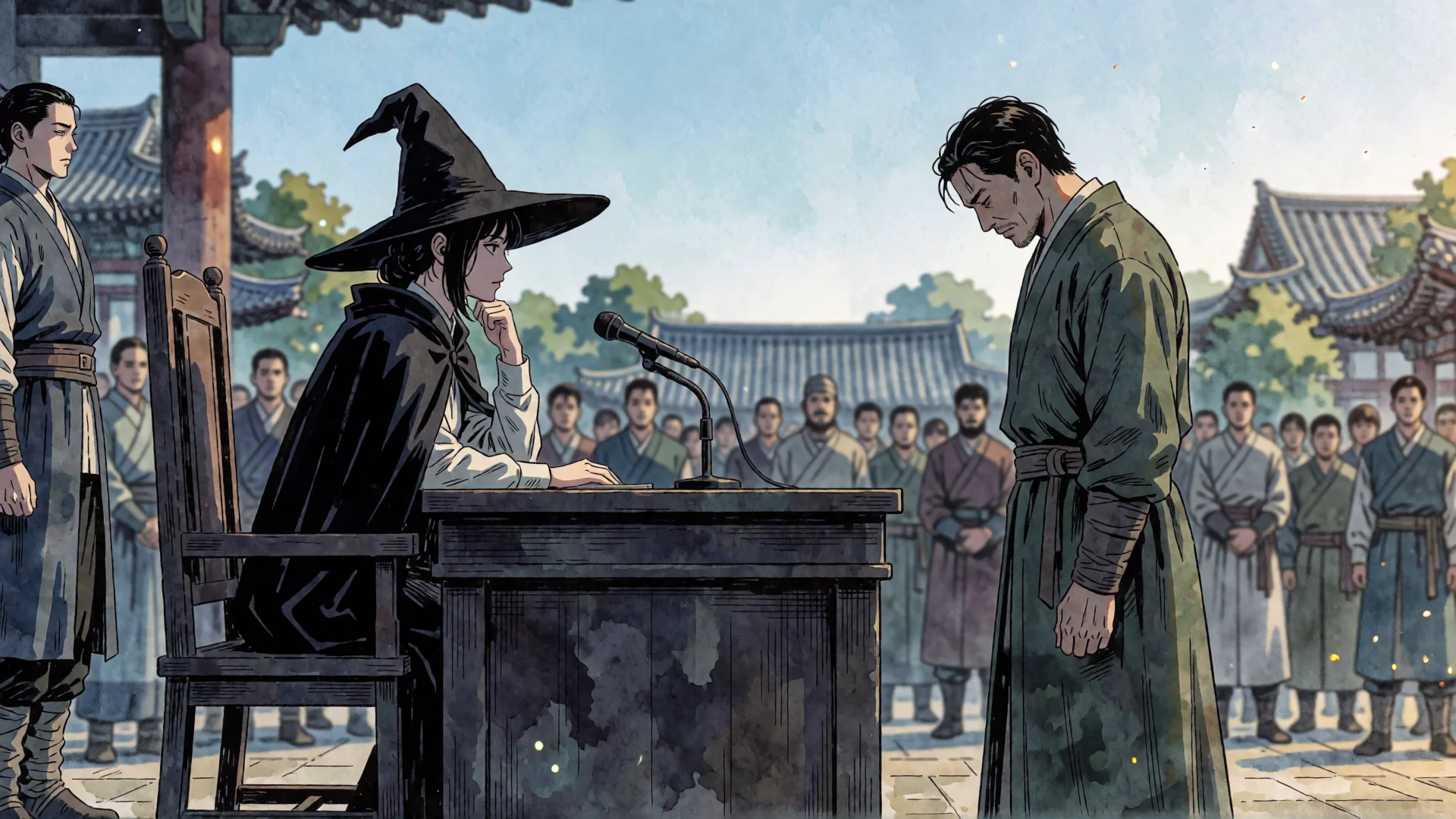 Chapter 56
The chapter opens with Go Yuir recalling a past interaction with Dang Seo-rin, who had created a grand spell over a long period. Dang Seo-rin demonstrates this spell by stabbing a fountain pen into Go Yuir's right hand, causing him to scream. Surprisingly, she immediately stabs her own left hand. As they bleed, Dang Seo-rin sings, causing a holographic blue scale to appear. The wounds instantly swap places: Go Yuir’s right hand heals while his left is wounded, and Dang Seo-rin’s left hand heals while her right is wounded. She explains this as an 'equivalent exchange' spell that balances pain and injury between two consenting parties. Go Yuir asks if it can transfer wounds to enemies like 'Ten Legs,' but Dang Seo-rin clarifies it requires mutual consent and cannot affect non-humans or inanimate objects, dismissing the idea that it is useless. After a minor magical skirmish where Go Yuir easily defeats her due to the preparation time required for her song spells, the narrative jumps forward exactly 398 days, 16 hours, and 38 minutes. Go Yuir visits the Samcheon World headquarters but finds Dang Seo-rin absent. He encounters Yu Ji-won, a silver-haired executive described as a psychopath and Latin major, who is guarding the base. Yu Ji-won explains that Dang Seo-rin is presiding over a public 'trial day' in the execution square, a monthly event in Busan for judging murders and serious injuries. Go Yuir proceeds to the square, where hundreds of citizens are gathered. A guild member announces the case: a witch from the combat squad deserted during an expedition, causing injuries to comrades. The crowd boos the defendant, who has turned himself in. Dang Seo-rin, acting as judge with a voice amplified by magic, questions the defendant, who expresses regret and promises not to repeat the mistake. Dang Seo-rin then activates the equivalent exchange spell. Black, snake-like threads crawl from Dang Seo-rin, the guild members, and the headquarters, representing the burdens of desertion, and tip the scales. In exchange, white threads emerge from the defendant. Dang Seo-rin imposes a new condition: the defendant is now magically bound to never retreat from any battlefield before comrades or citizens. The defendant, initially pale, shows relief upon accepting this burden as a form of penance. The scales balance, and the crowd applauds. Go Yuir is shocked to realize the spell’s true utility: it functions as a moral and legal mechanism, allowing Busan to maintain human-led justice and reject AI judges, a tradition established by these 'witch trials.'
Guest access includes first 49 of 485 audio chapters. Sign in for Free access.
10:22
Chapter 56
The chapter opens with Go Yuir recalling a past interaction with Dang Seo-rin, who had created a grand spell over a long period. Dang Seo-rin demonstrates this spell by stabbing a fountain pen into Go Yuir's right hand, causing him to scream. Surprisingly, she immediately stabs her own left hand. As they bleed, Dang Seo-rin sings, causing a holographic blue scale to appear. The wounds instantly swap places: Go Yuir’s right hand heals while his left is wounded, and Dang Seo-rin’s left hand heals while her right is wounded. She explains this as an 'equivalent exchange' spell that balances pain and injury between two consenting parties. Go Yuir asks if it can transfer wounds to enemies like 'Ten Legs,' but Dang Seo-rin clarifies it requires mutual consent and cannot affect non-humans or inanimate objects, dismissing the idea that it is useless. After a minor magical skirmish where Go Yuir easily defeats her due to the preparation time required for her song spells, the narrative jumps forward exactly 398 days, 16 hours, and 38 minutes. Go Yuir visits the Samcheon World headquarters but finds Dang Seo-rin absent. He encounters Yu Ji-won, a silver-haired executive described as a psychopath and Latin major, who is guarding the base. Yu Ji-won explains that Dang Seo-rin is presiding over a public 'trial day' in the execution square, a monthly event in Busan for judging murders and serious injuries. Go Yuir proceeds to the square, where hundreds of citizens are gathered. A guild member announces the case: a witch from the combat squad deserted during an expedition, causing injuries to comrades. The crowd boos the defendant, who has turned himself in. Dang Seo-rin, acting as judge with a voice amplified by magic, questions the defendant, who expresses regret and promises not to repeat the mistake. Dang Seo-rin then activates the equivalent exchange spell. Black, snake-like threads crawl from Dang Seo-rin, the guild members, and the headquarters, representing the burdens of desertion, and tip the scales. In exchange, white threads emerge from the defendant. Dang Seo-rin imposes a new condition: the defendant is now magically bound to never retreat from any battlefield before comrades or citizens. The defendant, initially pale, shows relief upon accepting this burden as a form of penance. The scales balance, and the crowd applauds. Go Yuir is shocked to realize the spell’s true utility: it functions as a moral and legal mechanism, allowing Busan to maintain human-led justice and reject AI judges, a tradition established by these 'witch trials.'
Guest access includes first 49 of 485 audio chapters. Sign in for Free access.
10:22
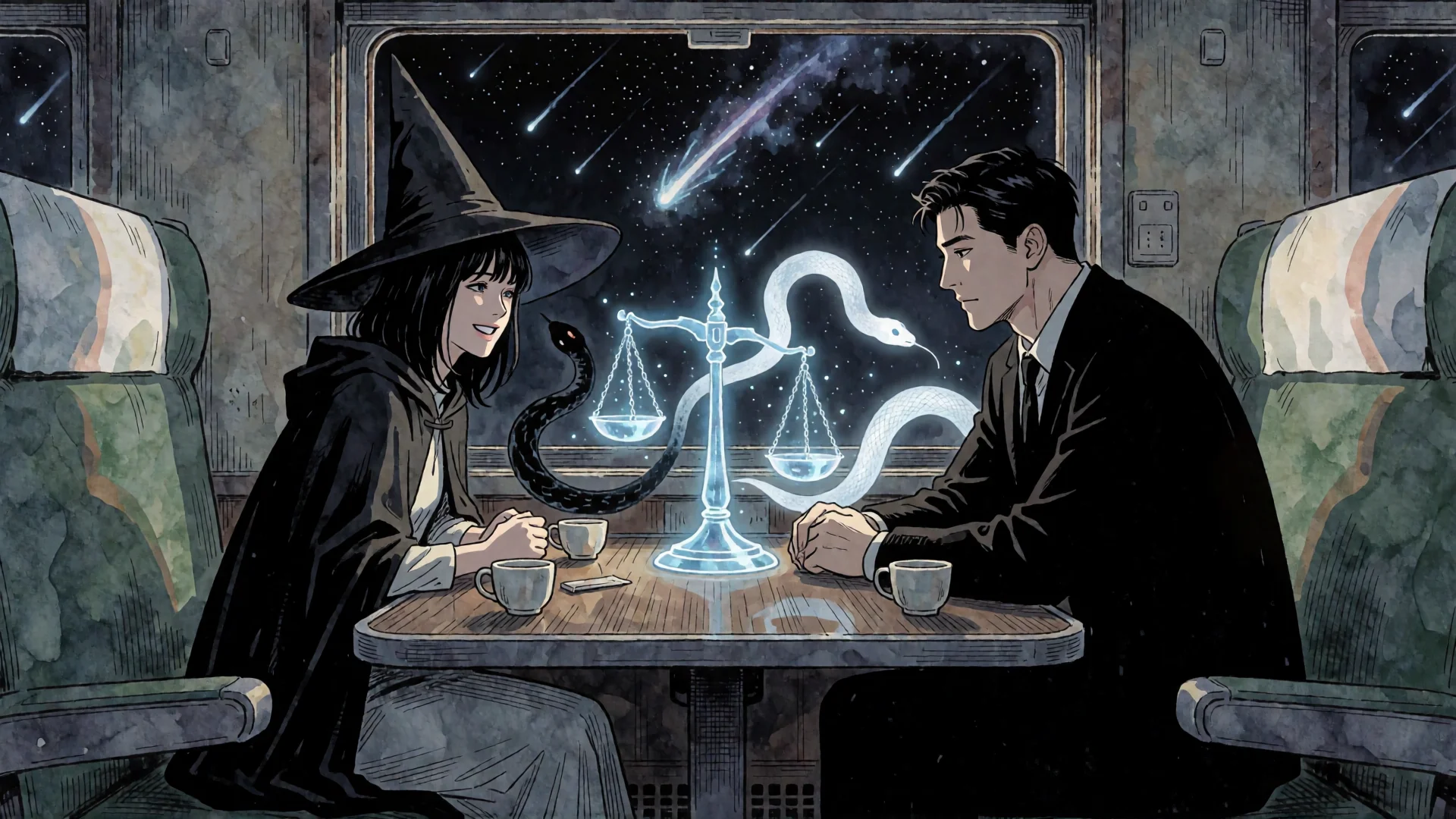 Chapter 57
Following the conclusion of a trial, the narrator (Undertaker) and Dang Seo-rin share a meal of Sundae stew, their relationship having evolved from professional peers to close 'foodie friends.' Undertaker queries Dang Seo-rin about the 'equivalent exchange' judgments she employs, a system not present in his previous visits. Dang Seo-rin explains that with prisons gone, Busan utilizes a pragmatic version of the Code of Hammurabi, where punishment is tailored to the crime and agreed upon by all parties to ensure 'fairness' without wasting labor. She argues that while traditional society relied on prisons, her method offers a qualitative distinction in justice. During their meal, a child approaches Dang Seo-rin for an autograph on a hat, showcasing her status as Busan's beloved ruler, though she quickly drops the persona once the interaction ends. She warns that her justice relies on consent, as people can judge fairness wrongly, but asserts that in the apocalypse, her trials are preferable to random witch hunts. She invites Undertaker to observe a trial in a month. A month later, Undertaker arrives at the execution square with homemade Melona ice cream, a gift Dang Seo-rin admires. He observes several rational but harsh judgments: a thief serves a victim for life; a journalist who caused a suicide must publish their own wrongdoings; and a wage defaulter must live in sync with the victim. The most poignant trial involves a murderer. When asked if they regret the act, the murderer agrees to endure any punishment from the bereaved family without resistance. The family immediately attacks, and despite the lack of security intervention, they beat the murderer to death in the square. Undertaker reflects that these trials, enforced by magic, represent a strange but necessary rationality in the apocalypse, contrasting with the corruption of other cities. Later, on a train, a drunk Dang Seo-rin asks Undertaker for his honest opinion of the trial. Seeking validation, she activates the equivalent exchange spell, asking him to place his thoughts of her on the scales. Undertaker, surprised by the emotional nature of the request, complies. A shadowy snake tail emerges from his chest, meeting a white thread-like snake from her heart. The scales balance perfectly. When she asks what the result signifies, he calls it a secret. As the scales glow faintly against the backdrop of a meteor shower, Dang Seo-rin smiles brightly, accepting the ambiguous answer.
Guest access includes first 49 of 485 audio chapters. Sign in for Free access.
10:55
Chapter 57
Following the conclusion of a trial, the narrator (Undertaker) and Dang Seo-rin share a meal of Sundae stew, their relationship having evolved from professional peers to close 'foodie friends.' Undertaker queries Dang Seo-rin about the 'equivalent exchange' judgments she employs, a system not present in his previous visits. Dang Seo-rin explains that with prisons gone, Busan utilizes a pragmatic version of the Code of Hammurabi, where punishment is tailored to the crime and agreed upon by all parties to ensure 'fairness' without wasting labor. She argues that while traditional society relied on prisons, her method offers a qualitative distinction in justice. During their meal, a child approaches Dang Seo-rin for an autograph on a hat, showcasing her status as Busan's beloved ruler, though she quickly drops the persona once the interaction ends. She warns that her justice relies on consent, as people can judge fairness wrongly, but asserts that in the apocalypse, her trials are preferable to random witch hunts. She invites Undertaker to observe a trial in a month. A month later, Undertaker arrives at the execution square with homemade Melona ice cream, a gift Dang Seo-rin admires. He observes several rational but harsh judgments: a thief serves a victim for life; a journalist who caused a suicide must publish their own wrongdoings; and a wage defaulter must live in sync with the victim. The most poignant trial involves a murderer. When asked if they regret the act, the murderer agrees to endure any punishment from the bereaved family without resistance. The family immediately attacks, and despite the lack of security intervention, they beat the murderer to death in the square. Undertaker reflects that these trials, enforced by magic, represent a strange but necessary rationality in the apocalypse, contrasting with the corruption of other cities. Later, on a train, a drunk Dang Seo-rin asks Undertaker for his honest opinion of the trial. Seeking validation, she activates the equivalent exchange spell, asking him to place his thoughts of her on the scales. Undertaker, surprised by the emotional nature of the request, complies. A shadowy snake tail emerges from his chest, meeting a white thread-like snake from her heart. The scales balance perfectly. When she asks what the result signifies, he calls it a secret. As the scales glow faintly against the backdrop of a meteor shower, Dang Seo-rin smiles brightly, accepting the ambiguous answer.
Guest access includes first 49 of 485 audio chapters. Sign in for Free access.
10:55
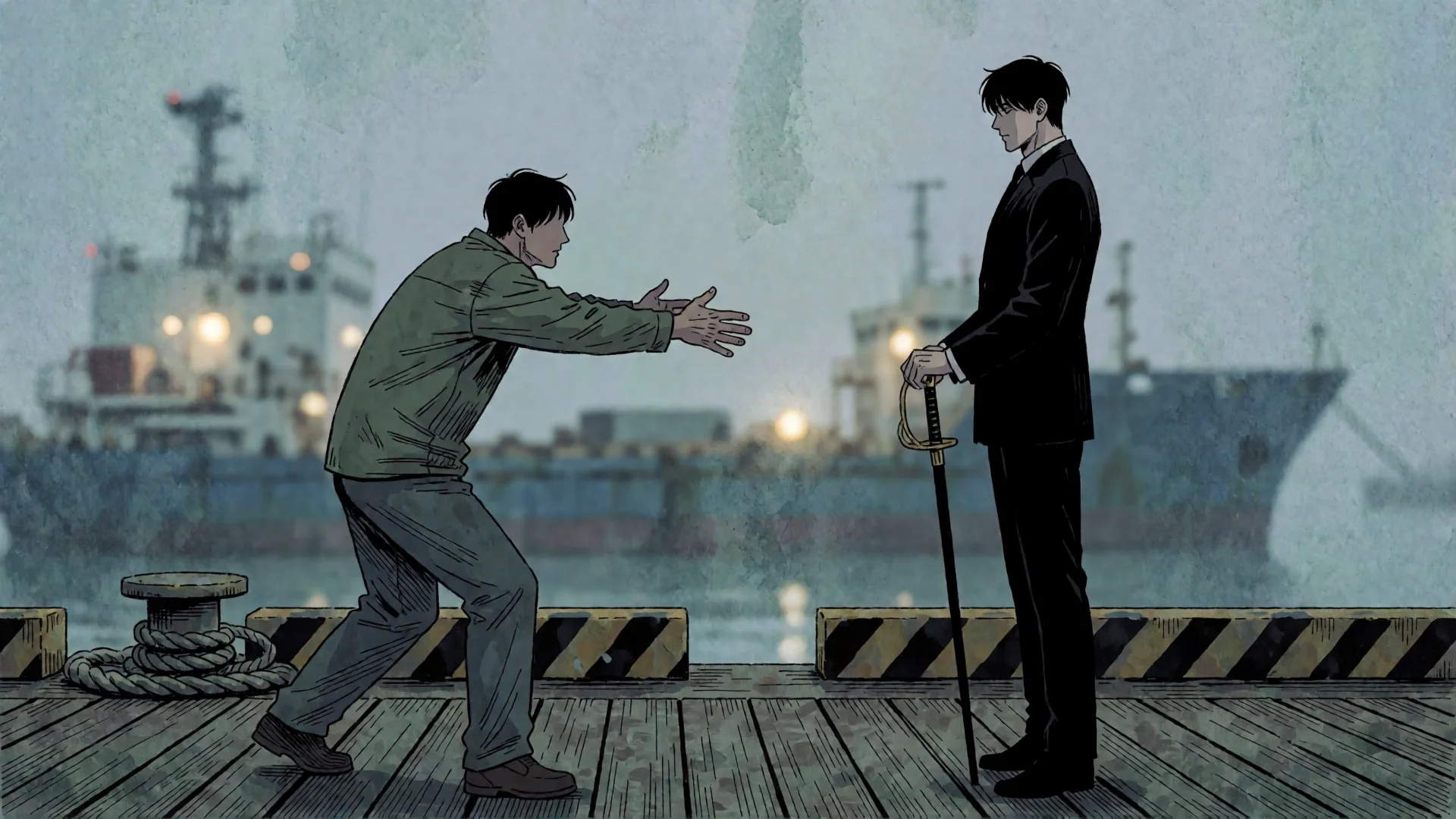 Chapter 58
The Undertaker reflects on his 1183 regression cycles, comparing his struggle to prevent world destruction to climbing the Everest of time. He recounts the failure of the 'Revival Route,' which relied on a Saintess to monitor awakeners, Seo Gyu to manage the SG Net, and Noh Do-hwa to maintain infrastructure, all led by himself as the Undertaker. The route collapsed because Awakeners' powers are double-edged swords; without restraint, they become monsters themselves. He notes that figures like Dang Seo-rin and Cheon Yo-hwa exemplify this curse, where miracles are also curses. He then details his first successful strategy, the 'A Route' or 'Academy Route,' co-created with Old Man Scho (Emit Schopenhauer). To recruit talent without the stigma of a guild, they established 'Freedom Academy,' exploiting Asian cultural biases toward prestigious education over mercenary work. Old Man Scho, an art school graduate with a German background, served as Principal, while the Undertaker was Vice-Principal. In the 18th cycle, they discussed recruiting a powerful Awakener, the 'Puppeteer,' rumored to be in Fukuoka. Despite the Undertaker's reluctance due to past friction with Old Man Scho, they agreed on a trip. Old Man Scho gifted him tonkotsu ramen instructions, and the Saintess of National Salvation cheered him on via a system message. The Undertaker traveled to Fukuoka, which was occupied by Koreans from the Second Provisional Government of Korea, led by Former Mayor Jung Sang-guk. The government had renamed Fukuoka 'Busan' and welcomed the Undertaker with a massive, orchestrated cheering crowd, waving banners proclaiming him the 'Pride of Korea.' Jung Sang-guk, a former politician turned exile leader, enthusiastically greeted the Undertaker, hugging him and shaking hands with his ministers. The Undertaker felt overwhelmed by the absurdity of the situation, recalling Old Man Scho's mockery of his swordsmanship and the chaotic nature of his allies, realizing why he had disliked this assignment.
Guest access includes first 49 of 485 audio chapters. Sign in for Free access.
15:48
Chapter 58
The Undertaker reflects on his 1183 regression cycles, comparing his struggle to prevent world destruction to climbing the Everest of time. He recounts the failure of the 'Revival Route,' which relied on a Saintess to monitor awakeners, Seo Gyu to manage the SG Net, and Noh Do-hwa to maintain infrastructure, all led by himself as the Undertaker. The route collapsed because Awakeners' powers are double-edged swords; without restraint, they become monsters themselves. He notes that figures like Dang Seo-rin and Cheon Yo-hwa exemplify this curse, where miracles are also curses. He then details his first successful strategy, the 'A Route' or 'Academy Route,' co-created with Old Man Scho (Emit Schopenhauer). To recruit talent without the stigma of a guild, they established 'Freedom Academy,' exploiting Asian cultural biases toward prestigious education over mercenary work. Old Man Scho, an art school graduate with a German background, served as Principal, while the Undertaker was Vice-Principal. In the 18th cycle, they discussed recruiting a powerful Awakener, the 'Puppeteer,' rumored to be in Fukuoka. Despite the Undertaker's reluctance due to past friction with Old Man Scho, they agreed on a trip. Old Man Scho gifted him tonkotsu ramen instructions, and the Saintess of National Salvation cheered him on via a system message. The Undertaker traveled to Fukuoka, which was occupied by Koreans from the Second Provisional Government of Korea, led by Former Mayor Jung Sang-guk. The government had renamed Fukuoka 'Busan' and welcomed the Undertaker with a massive, orchestrated cheering crowd, waving banners proclaiming him the 'Pride of Korea.' Jung Sang-guk, a former politician turned exile leader, enthusiastically greeted the Undertaker, hugging him and shaking hands with his ministers. The Undertaker felt overwhelmed by the absurdity of the situation, recalling Old Man Scho's mockery of his swordsmanship and the chaotic nature of his allies, realizing why he had disliked this assignment.
Guest access includes first 49 of 485 audio chapters. Sign in for Free access.
15:48
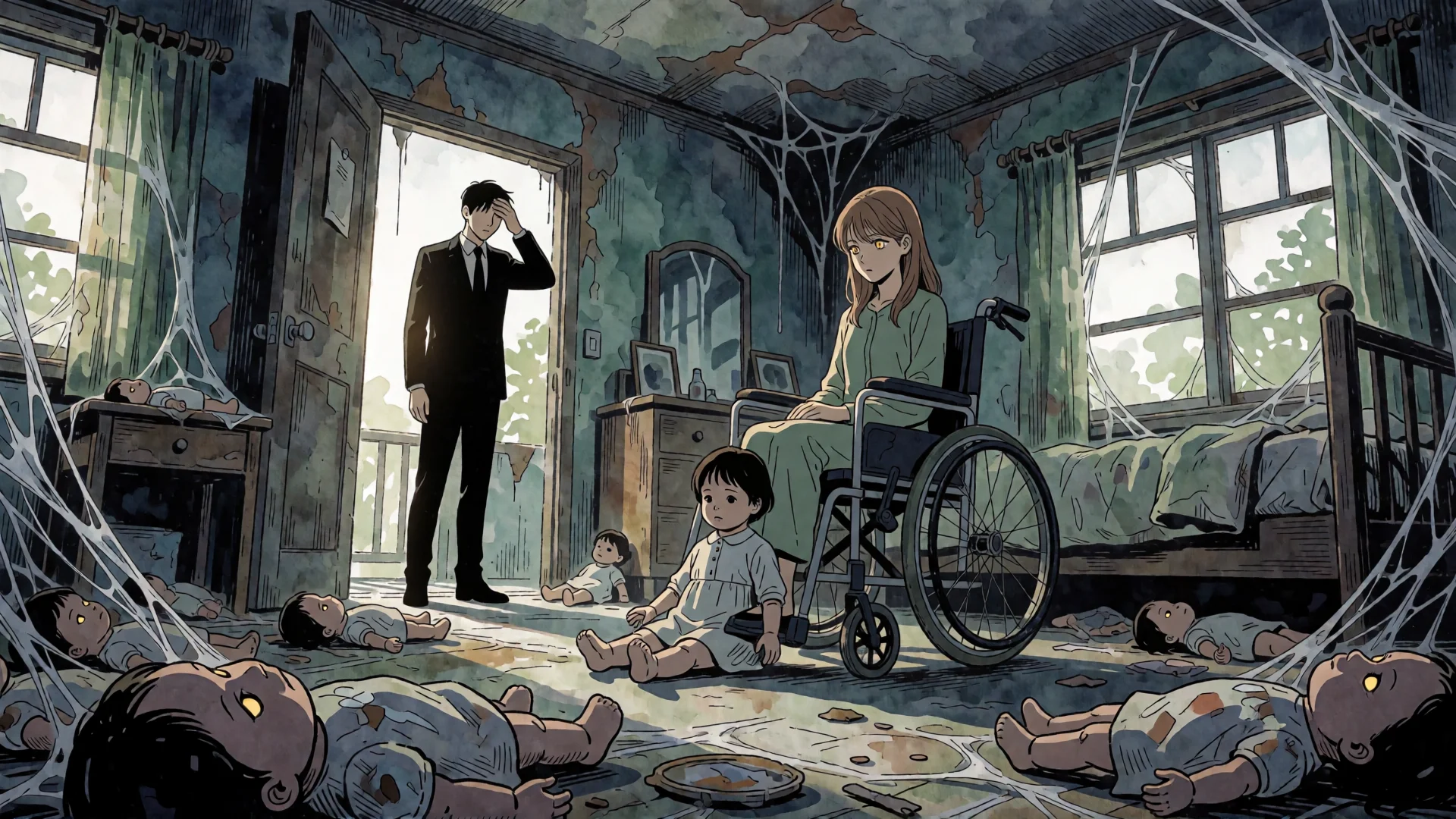 Chapter 59
The narrator (Undertaker) reflects on his strategic dilemma in Fukuoka: he must abduct the A-class Awakener 'Puppeteer' without offending the local Japanese authorities or the exiled Korean Second Provisional Government, led by former mayor Jung Sang-guk. Unlike the chaotic Korean Peninsula, Japan's government still holds power and risks, so Undertaker chooses diplomacy over brute force, despite having the capacity to act differently in his 180th cycle. He spends the night drinking with Jung Sang-guk, praising him to secure his goodwill. When Undertaker mentions he is seeking 'Puppeteer' to recruit her into his academy, Jung Sang-guk becomes visibly nervous, stuttering before claiming to know the target well. He invites Undertaker outside for a private conversation amidst a meteor shower.
Outside, Jung Sang-guk confesses that Puppeteer is his daughter, Lee Ha-yul, explaining her surname comes from her mother. He claims she is a 'hidden daughter' and asks Undertaker to take care of her if he takes her away. The next day, Jung visits Undertaker’s lodging, handing over the address while wearing gloves and emitting a strong fragrance. He awkwardly refuses to accompany Undertaker, citing his daughter’s rebellious phase and claiming a housekeeper is present. Undertaker notes the inconsistency: if the family were stable, the biological mother would be there, not a housekeeper.
Undertaker arrives at the address, finding an abandoned, cobweb-covered house filled with dolls. He discovers the housekeeper dead, hanging by cobwebs, surrounded by 13 dolls that move like marionettes controlled by the corpse’s strings. Realizing the housekeeper died over 30 hours ago, Undertaker senses Jung Sang-guk’s lie. He returns to his lodging to investigate Jung, only to find Jung’s corpse hanging in his room, suspended by cobwebs. Reacting instantly, Undertaker incinerates the body completely using his aura to erase all evidence and traces. He creates a plausible alibi by acting casually among the lodging staff, who confirm they did not see Jung enter.
Returning stealthily to the doll house, Undertaker finds Lee Ha-yul’s corpse. She is a young woman with chestnut hair, seated in a wheelchair, with her legs missing, stabbed in the chest by a knife held by a doll. Undertaker realizes the Puppeteer was a disabled individual, a fact obscured by Jung’s deception. The narrator concludes that Jung Sang-guk is the true culprit, having murdered his own daughter and framed her, leaving Undertaker to deal with the aftermath and charge Jung for the misfortune.
Guest access includes first 49 of 485 audio chapters. Sign in for Free access.
12:46
Chapter 59
The narrator (Undertaker) reflects on his strategic dilemma in Fukuoka: he must abduct the A-class Awakener 'Puppeteer' without offending the local Japanese authorities or the exiled Korean Second Provisional Government, led by former mayor Jung Sang-guk. Unlike the chaotic Korean Peninsula, Japan's government still holds power and risks, so Undertaker chooses diplomacy over brute force, despite having the capacity to act differently in his 180th cycle. He spends the night drinking with Jung Sang-guk, praising him to secure his goodwill. When Undertaker mentions he is seeking 'Puppeteer' to recruit her into his academy, Jung Sang-guk becomes visibly nervous, stuttering before claiming to know the target well. He invites Undertaker outside for a private conversation amidst a meteor shower.
Outside, Jung Sang-guk confesses that Puppeteer is his daughter, Lee Ha-yul, explaining her surname comes from her mother. He claims she is a 'hidden daughter' and asks Undertaker to take care of her if he takes her away. The next day, Jung visits Undertaker’s lodging, handing over the address while wearing gloves and emitting a strong fragrance. He awkwardly refuses to accompany Undertaker, citing his daughter’s rebellious phase and claiming a housekeeper is present. Undertaker notes the inconsistency: if the family were stable, the biological mother would be there, not a housekeeper.
Undertaker arrives at the address, finding an abandoned, cobweb-covered house filled with dolls. He discovers the housekeeper dead, hanging by cobwebs, surrounded by 13 dolls that move like marionettes controlled by the corpse’s strings. Realizing the housekeeper died over 30 hours ago, Undertaker senses Jung Sang-guk’s lie. He returns to his lodging to investigate Jung, only to find Jung’s corpse hanging in his room, suspended by cobwebs. Reacting instantly, Undertaker incinerates the body completely using his aura to erase all evidence and traces. He creates a plausible alibi by acting casually among the lodging staff, who confirm they did not see Jung enter.
Returning stealthily to the doll house, Undertaker finds Lee Ha-yul’s corpse. She is a young woman with chestnut hair, seated in a wheelchair, with her legs missing, stabbed in the chest by a knife held by a doll. Undertaker realizes the Puppeteer was a disabled individual, a fact obscured by Jung’s deception. The narrator concludes that Jung Sang-guk is the true culprit, having murdered his own daughter and framed her, leaving Undertaker to deal with the aftermath and charge Jung for the misfortune.
Guest access includes first 49 of 485 audio chapters. Sign in for Free access.
12:46
 Chapter 60
In the 19th cycle, the protagonist, the Undertaker, deliberately tracks Jung Sang-guk to the 'House of Dolls' in Fukuoka to investigate the Puppeteer’s true identity and motives. Unlike the 18th cycle where he merely observed the aftermath, this time he eavesdrops as Jung Sang-guk enters the house and bows submissively to the housekeeper, whom he addresses as 'Ms. Ha-yul.' The Undertaker is shocked to realize the housekeeper is merely a puppet controlled by Jung Sang-guk’s daughter, Lee Ha-yul. Eavesdropping reveals that the Undertaker himself plans to recruit Lee Ha-yul for an academy, but Jung Sang-guk refuses, attempting to stall by sending the Undertaker to an inn. The housekeeper detects this deception, accusing Jung Sang-guk of lying about his secret meeting with the Undertaker during the drinking party. Commanded downstairs, Jung Sang-guk begs for mercy, specifically pleading to spare the 'Doll Room,' confirming the housekeeper is indeed Lee Ha-yul. She silences him, dragging his bound body to the basement using puppet strings. Concluding that Lee Ha-yul controls both humans and possesses aura-infused strings, the Undertaker breaches the house’s security system. He shatters hundreds of aura-imbued marionettes with his advanced aura cultivation, impressed by the prodigy’s self-taught mastery. He demands to speak with Lee Ha-yul to recruit her for the academy. The housekeeper allows him entry. Inside the basement, the Undertaker sees Lee Ha-yul, a legless girl with golden eyes and light chestnut hair, seated in a wheelchair. Jung Sang-guk is also present, fully bound by strings and bleeding from his fingernails, revealing why he wore gloves in the previous cycle: to hide the damage inflicted by the puppet controls.
Guest access includes first 49 of 485 audio chapters. Sign in for Free access.
12:14
Chapter 60
In the 19th cycle, the protagonist, the Undertaker, deliberately tracks Jung Sang-guk to the 'House of Dolls' in Fukuoka to investigate the Puppeteer’s true identity and motives. Unlike the 18th cycle where he merely observed the aftermath, this time he eavesdrops as Jung Sang-guk enters the house and bows submissively to the housekeeper, whom he addresses as 'Ms. Ha-yul.' The Undertaker is shocked to realize the housekeeper is merely a puppet controlled by Jung Sang-guk’s daughter, Lee Ha-yul. Eavesdropping reveals that the Undertaker himself plans to recruit Lee Ha-yul for an academy, but Jung Sang-guk refuses, attempting to stall by sending the Undertaker to an inn. The housekeeper detects this deception, accusing Jung Sang-guk of lying about his secret meeting with the Undertaker during the drinking party. Commanded downstairs, Jung Sang-guk begs for mercy, specifically pleading to spare the 'Doll Room,' confirming the housekeeper is indeed Lee Ha-yul. She silences him, dragging his bound body to the basement using puppet strings. Concluding that Lee Ha-yul controls both humans and possesses aura-infused strings, the Undertaker breaches the house’s security system. He shatters hundreds of aura-imbued marionettes with his advanced aura cultivation, impressed by the prodigy’s self-taught mastery. He demands to speak with Lee Ha-yul to recruit her for the academy. The housekeeper allows him entry. Inside the basement, the Undertaker sees Lee Ha-yul, a legless girl with golden eyes and light chestnut hair, seated in a wheelchair. Jung Sang-guk is also present, fully bound by strings and bleeding from his fingernails, revealing why he wore gloves in the previous cycle: to hide the damage inflicted by the puppet controls.
Guest access includes first 49 of 485 audio chapters. Sign in for Free access.
12:14
[[LABEL]]
[[SUB]]
[[PROGRESS]]
Novel discussion
Comments
Discuss the story without chapter-specific spoilers.
Sign in to join discussion.